For the first two days after Phantom Blade Zero unlocked on 29 October, the public only had two kinds of numbers: concurrent players and third-party estimates. 430,000 concurrents on day one, roughly 720,000 that evening, 850,000 pre-orders worth $43 million. S-GAME had not published a sales figure of any kind, and the previous version of this article ended by telling readers to watch for one.
In the first two days of November, that gap closed. S-GAME announced that the game had sold more than 4 million copies within 72 hours of release. In the same window, SteamDB recorded a new concurrent-player peak, and the analytics firm Alinea Analytics published the first post-launch revenue estimate.
All three numbers now circulate together, and they are routinely quoted as if they measured the same thing. This article separates them by source: what the studio itself said, what a tracking service measured, and what a model calculated — and what each of them can and cannot answer.
The studio's first sales number: 4 million copies in 72 hours
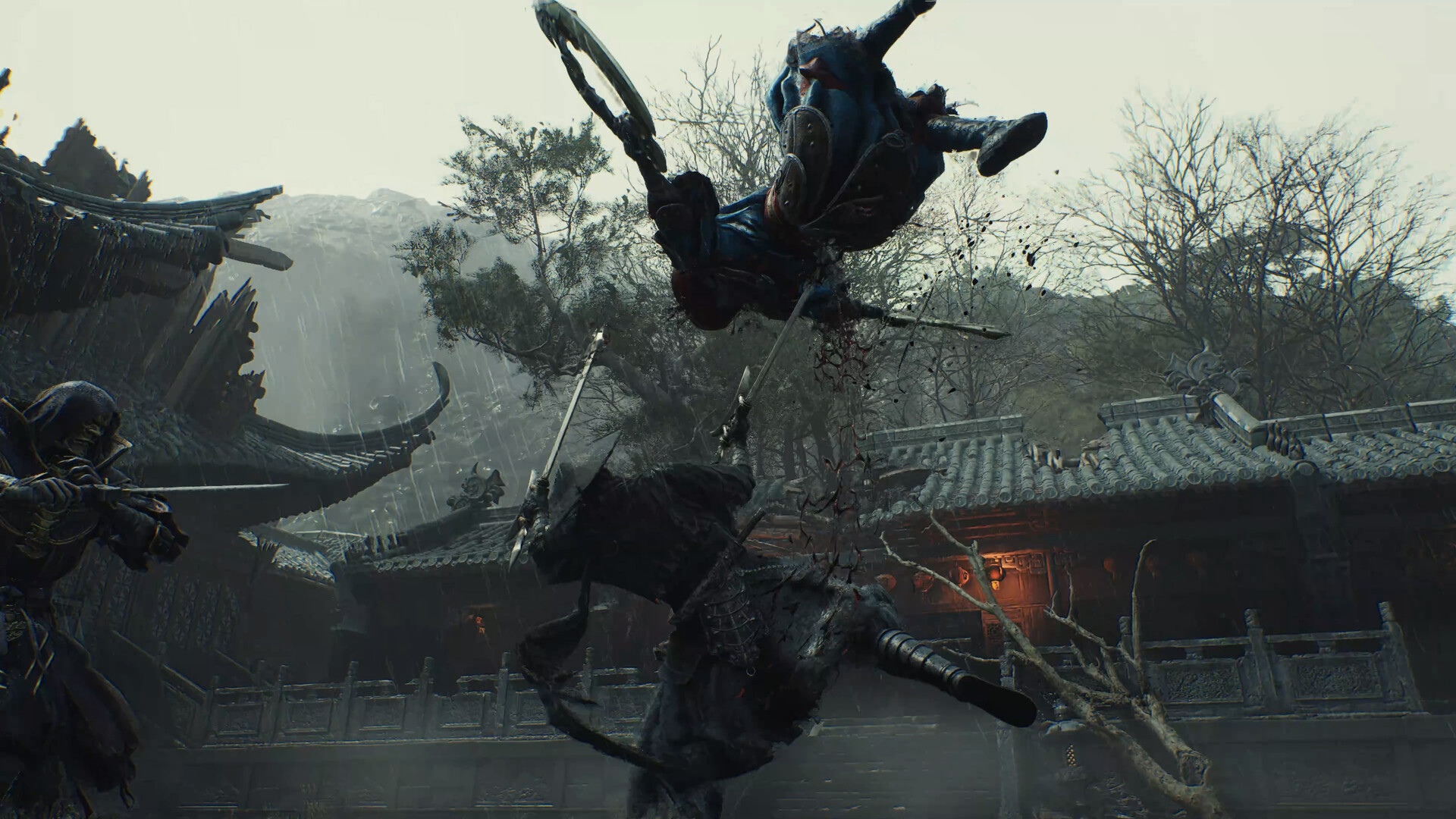
S-GAME announced that Phantom Blade Zero had sold more than 4 million copies across PS5 and PC within 72 hours of launch, and thanked players for the reception. PlayGround.ru and Gamemag.ru both reported the announcement on 2 November, each attributing the figure to the studio.
It is the first official sales figure for the game. Every number before it came from third-party modelling — the 850,000 pre-orders were Alinea's estimate, not something the studio published. The wording is "more than", not an exact total, and the announcement came without a platform split, a regional split or any revenue figure.
Divided across 72 hours, 4 million copies works out to roughly 55,000 copies an hour. That arithmetic describes the scale of the ramp, not the shape of the daily curve: launch day concentrated sales into the first few hours, and a second wave arrived with the first weekend.
Set against the pre-order estimate, the conversion is the story. When the review embargo lifted on 26 October, Alinea put pre-orders at 850,000 copies, 73.8% on Steam and 26.2% on PS5. Seventy-two hours after launch the official figure was 4 million. The gap is more than fourfold, which says the launch audience was not mainly the people who had ordered weeks earlier; it was people brought in by reviews and word of mouth after release.
| Measure | Figure | Coverage | What it is |
|---|---|---|---|
| Official sales | More than 4 million copies in 72 hours | PS5 and PC (Steam, Epic) | Studio announcement, no platform split |
| Steam concurrent peak | 833,921 players (1 November) | Steam only | SteamDB tracking |
| Revenue estimate | About $223 million on about 4.3 million copies | Steam and PS5 | Alinea model, excludes WeGame and other stores |
An 833,921 Steam peak, set on the first weekend
SteamDB recorded a peak of 833,921 concurrent players on 1 November, the first weekend after release. The previous high, set on launch night, was about 723,876. The new record is roughly 110,000 higher, an increase of about 15%. PlayGround.ru described it on 1 November as the highest concurrent figure any single-player game has reached on Steam in 2026.
A single-player premium game usually peaks on its launch day and then declines as players finish and refund. A peak on day three instead means weekend traffic outweighed the natural decay of the launch cohort. Phantom Blade Zero unlocked on a Thursday; the first full weekend fell on 31 October and 1 November, which lines up with days off in Western markets.
The sales chart tells the same story for the same week. In Steam's weekly top-seller list for week 45, covering late October into early November, the game debuted in first place, ahead of Call of Duty: Modern Warfare 4 in second and the indie release Probably Stolen in third; Crimson Desert Enhanced rose to sixth. That chart ranks by revenue, which is not the same measurement as concurrent players, but both point at one thing: the buying and the playing were concentrated in launch week.
The figure covers Steam alone. Sony publishes no concurrent-player data for PS5, so 833,921 is a floor for the whole game rather than a total. It is also not a sales number: copies bought and never launched, offline sessions and family-sharing accounts are all invisible to it.
Alinea's $223 million is a model, not a financial report
On 3 November, Alinea Analytics published its first post-launch estimate: about 4.3 million copies sold across Steam and PS5 as of that morning, generating about $223 million in revenue. Steam accounts for roughly 3.1 million copies (about 72%) and PS5 for about 1.2 million (about 28%).
This does not contradict the official 4 million. The two figures take different snapshots — the studio's is a 72-hour mark, Alinea's is the morning of 3 November — and the model carries its own error. The more important difference is coverage. Alinea counts Steam and PS5 only, excluding WeGame and other PC storefronts, and excluding Epic as well; the "PC" in the official figure includes Epic.
Alinea also offers a cross-title comparison: by premium (buy-to-play) revenue, the game is already the tenth-biggest new release of 2026 across Steam, Xbox and PlayStation — despite having no Xbox version at all. That ranking is useful for scale, not as a place on a sales chart.
Most copies sold in Asia, most revenue earned outside it
Alinea's geographic split separates selling a lot from earning a lot. China, Taiwan and Hong Kong together account for about 55% of copies (56% on Steam, 50% on PlayStation), but regional pricing means those markets contribute only about 45% of revenue (40% on PlayStation, 47% on Steam).
The pricing gap can be measured directly. Against the $59.99 US list price, the Chinese price works out to about $40.31, 32.8% lower, and the Hong Kong price to about $41.80, 30.3% lower. Copies are counted at the low-price markets, revenue at what people actually paid, so the two shares diverge mechanically.
Read the other way, markets outside China, Taiwan and Hong Kong produced about $123 million from roughly 2 million copies. On that slice alone, the game would still rank inside the top 20 new releases of 2026 by revenue.
The split has also moved since pre-orders. In Alinea's 27 October newsletter, Greater China accounted for 62.5% of copies and 55.1% of revenue; a week later those shares were 55% and 45%. Nothing about the methodology changed — the overseas market simply scaled faster once the game was on sale.
The review embargo was the turning point
Alinea's daily revenue series shows when the West arrived. After the 18 August State of Play, US daily revenue roughly doubled from $72,000 to $146,000, while China went from $237,000 to $892,000. Both rose, China rose much faster, and the overall share barely moved. What changed the structure was the review embargo: US daily revenue ran at $106,000 on 25 October, rose to $230,000 on the 26th as reviews went live, then $463,000 on the 27th and $899,000 on the 28th — close to 8.5 times in four days.
The share data moves the same way. China's lifetime revenue share was near 68% when pre-orders opened in August and still 65% on 25 October; by 2 November it had fallen to 45%. Over the same stretch the US rose from 10% to 18% and the rest of the world from 25% to 38%. On launch day, the US and the rest of the world combined out-earned China for the first time in the game's history.
That curve explains how 4 million copies were assembled. The home market committed during pre-orders, while Western buyers waited for reviews and word of mouth. The embargo was the hinge and launch day was the multiplier. Alinea attributes the shift to positive reviews and the word of mouth that followed; in the numbers, the embargo date and the launch date are the two visible steps. The same newsletter is explicit that this does not mean China sold less — the overseas markets simply arrived later.
What the RMB 300–400 million budget means now
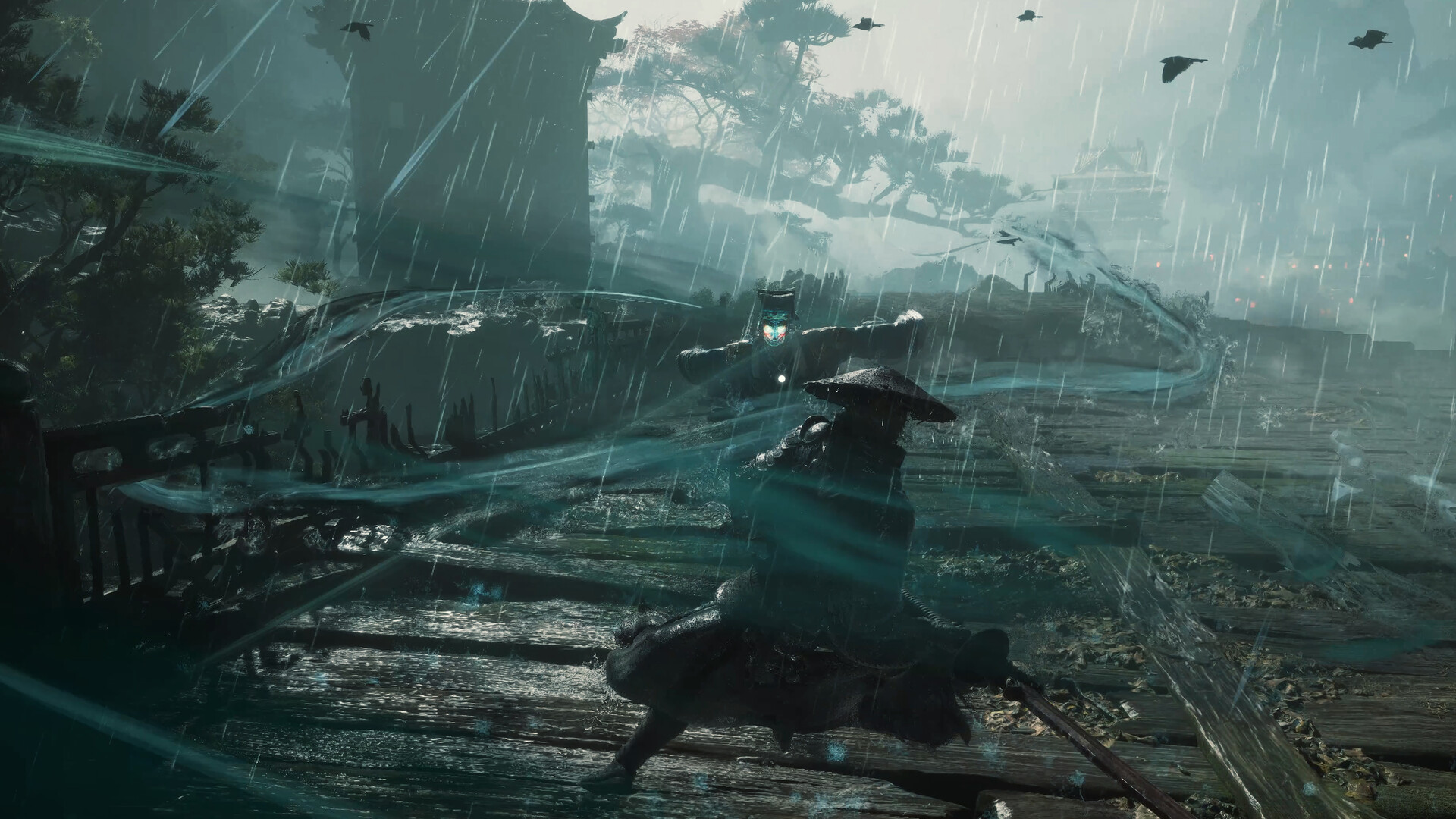
On 30 October, IT Home relayed comments from Lingyoufang founder Liang Qiwei to Lanjinger: the project began sketching its world and combat system in 2017, entered formal production in early 2022, and cost between RMB 300 million and RMB 400 million to develop.
An earlier version of this arithmetic used pre-order revenue: $43 million, about RMB 287 million, below the development range. The base has changed. Alinea's $223 million is roughly RMB 1.6 billion, about four times the top of that range. But that is gross revenue, before platform cuts, distribution and channel costs, and taxes — the amount reaching the developer is materially smaller, and the studio has published no revenue figure at all. The fair statement is that gross revenue now sits far above the development range, not that the game has recouped its costs.
S-GAME has released no financial statements, so break-even can only be bounded from third-party gross revenue — however high that number is, it cannot be stated as a conclusion.
What to watch from here
The most direct item is whether the studio adds a breakdown — platform, region, whether WeGame is included — and whether it publishes any revenue figure at all. Four million is an aggregate, and how it divides between PS5 and PC is unpublished; the only platform split available is Alinea's estimate of about 72% Steam to 28% PS5, which comes from a model rather than the studio.
The second is whether the peak can go higher. The 833,921 record was set on the first weekend; whether the second weekend, 7–8 November, comes close will show whether demand is still building. Single-player curves usually settle into a long tail after that. Alinea's 3 November note says daily volume has begun to decelerate "a bit", which it calls natural — the same thing seen from the other side of a peaking curve.
The third is what comes after the launch window. Sequels and spin-off content still hang on how this game sells, and Liang's line to PCGamesN has not changed: the team has ideas, but the result of this work comes first.
Post-launch support is continuing as well. PlayGround.ru reported on 3 November that S-GAME shipped a technical update that day, changing how ray-tracing shaders are compiled, fixing Bluetooth controller input latency, and reducing how often the boss Deadly Bride uses grab and throw combinations on easy and normal.