Ahead of launch, "is it open world?" is one of the most common questions about Phantom Blade Zero, and it has an official answer — one that also happens to describe the shape of the whole game. The developers position it between the two extremes: not an open world, not a corridor-linear action game, but something built out of large, handcrafted, seamlessly connected regions. The game launches on October 29, 2026 — the release-date page tracks the regional details — and what follows is based on what has been officially revealed so far, covering the world structure, how much freedom the structure actually allows inside a map, and why S-GAME chose not to go the open-world route.
The short answer: no — and here is the official positioning
At the game's dedicated State of Play on August 17, 2026, the official framing was explicit: Phantom Blade Zero is "neither an open-world game nor a linear adventure that runs from start to finish." Producer Soulframe Liang had described the same structure even earlier: it is closer to "a clear mainline with branches and side paths" running through it. Both statements were covered in Gamesky's report on the showcase.
Translated into practical terms: the direction of the main story is clear, and there is a relatively defined path through the game's regions — but those regions are not corridors. Each map holds side paths and detours, and whether to take them, and when, is left to the player. That is why the structure is best described as semi-open: exploration-dense, but deliberately scoped.
The actual structure: eight seamless maps anchored on Pang Town
The framework the developers have published works like this:
- Eight fully hand-drawn ink-wash maps connect seamlessly into one continuous world, with no loading breaks splitting the regions apart.
- The journey is anchored on Pang Town and fans outward from there — surrounding villages, valleys, lakes, and shadow-shrouded places. The bandit-held valley, the abandoned warehouse hung with mannequins, and the steam-driven iron tower shown in official footage all sit within that ring of destinations.
- Each map carries its own terrain logic: the official presentation shows open strongholds and villages with stealth routes on one end, and caves, temples, and estates that squeeze fights into close quarters on the other.
- Water is part of the routing, not just scenery: the official presentation includes a vast lake that has to be crossed on a special fast boat.
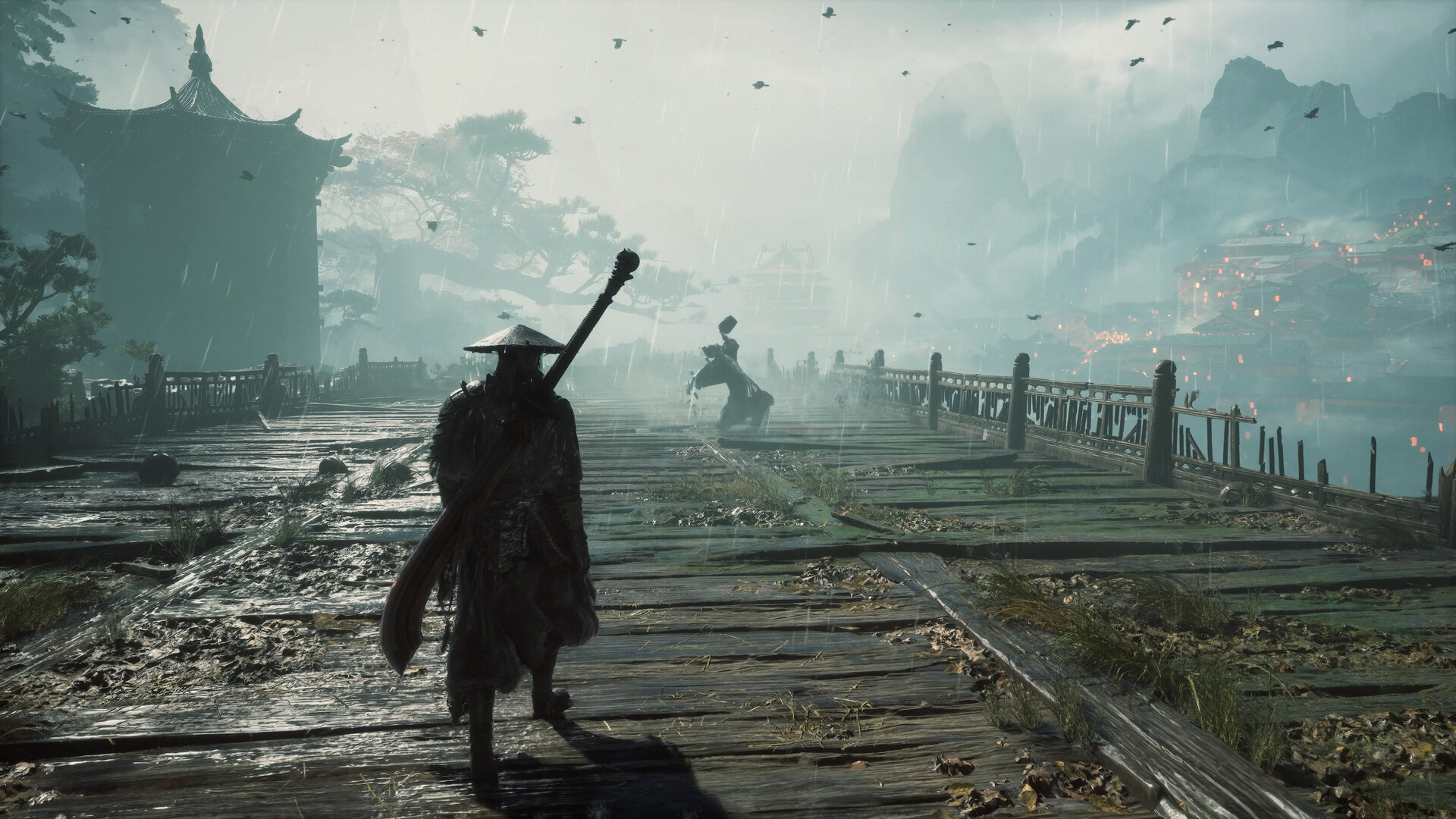
Official Phantom Blade Zero screenshot from the Steam store page. This layered look — architecture, terrain, and a distant destination all visible from one road — shows how one region hands over to the next.
For main-story length, how the eight endings work, and what exploration pays out, see Playtime and All 8 Endings — this article stays on the structural question.
How open does it actually play?
Four mechanics define how free the game feels in practice.
Maps mark a direction, not a solution
In structurally complex regions, the in-game map only marks a rough orientation and leaves the rest to be walked out. Liang's own framing is that "you won't get lost, and we have a map there" — guidance exists, but it does not explore on the player's behalf.
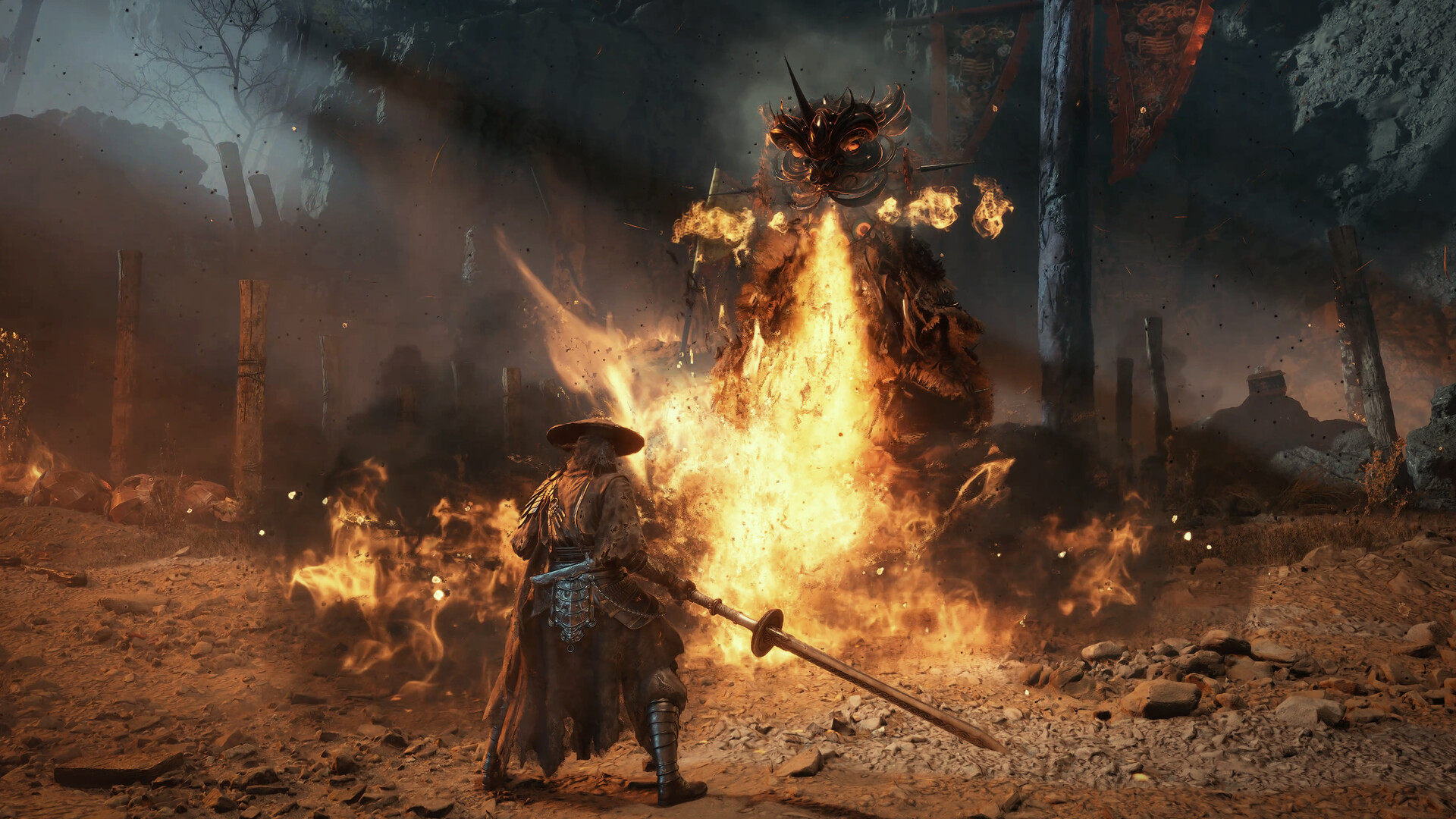
Official Phantom Blade Zero screenshot from the Steam store page. Tall, visible landmarks like this watchtower are how players keep their bearings when the map itself only offers rough directions.
Bells work as fast travel
Locations that have already been discovered can be revisited directly via bells, so crossing between regions does not mean re-treading old ground on foot. The mechanic fits the world's continuity: the eight regions form one connected land rather than a set of isolated stages, so what has been found stays reachable from the roads ahead.
Exploration pays in concrete ways
Hidden enemies, side quests, rare treasure, and significant story clues are scattered across the world — the developers describe every corner of it as handcrafted and full of things waiting to be found. The PlayStation blog also confirms that talking to NPCs and completing some of their side quests "might even open up new story paths."
A keys-and-locks loop pulls players back to old maps
In the interview following the release-date announcement, Liang described "something like 10 different kinds of keys and locks" in the game: secondary weapons double as keys — a hammer, for example, breaks fragile ground — and even from the last level, players can go all the way back to the first to claim what was out of reach before. New weapons and secondary weapons keep turning up out in the world as well, which is what keeps the return trip worthwhile. The weapon system behind that loop is covered in our Combat System section.
Why not an open world — and what that means for players
Liang's answer to the design question is straightforward: he wants layered levels, but does not want to push that complexity so far that players lose track of where they are. He has positioned Phantom Blade Zero as a "Soulslite" — it keeps the flavor of Souls-like level design, but scales the ambition back to something readable at a glance.
That sets two different expectations:
- Players hoping for vast wilderness and a fully free traversal order — the "walk out the gate and go anywhere" structure of an Elden Ring — will find this map more restrained in both scale and sequencing.
- Players who prefer levels where every region has a discernible intent benefit from the same idea: all eight maps are drawn by hand, and even travel between regions is staged as an experience, like the fast-boat crossing of the lake.
This article is based on the game's official State of Play showcase, the PlayStation Blog, and producer interviews, with information current as of September 2026. Details may adjust as launch approaches; official announcements take precedence.