Phantom Blade Zero arrives on October 29, 2026 (October 28 in the US and select regions), and two questions have followed the game throughout its pre-launch tour: how long is it, and how many endings does it have? Both answers come straight from the top. Director Soulframe Liang — founder of S-GAME and the game's creator — put the main story at roughly 20-30 hours, confirmed a total of 8 endings, and added a warning that turns the first number into a decision point: finish almost nothing beyond the critical path, and, in his words, "you might end up with a bad ending."
That combination — a moderately sized campaign attached to an unusually large ending count — is rare, and it changes how the game wants to be played. This article lays out everything officially confirmed about Phantom Blade Zero's playtime and its eight endings: where the numbers come from, how the game decides which ending you get, why the bad ending exists, and which questions nobody at S-GAME has answered yet.
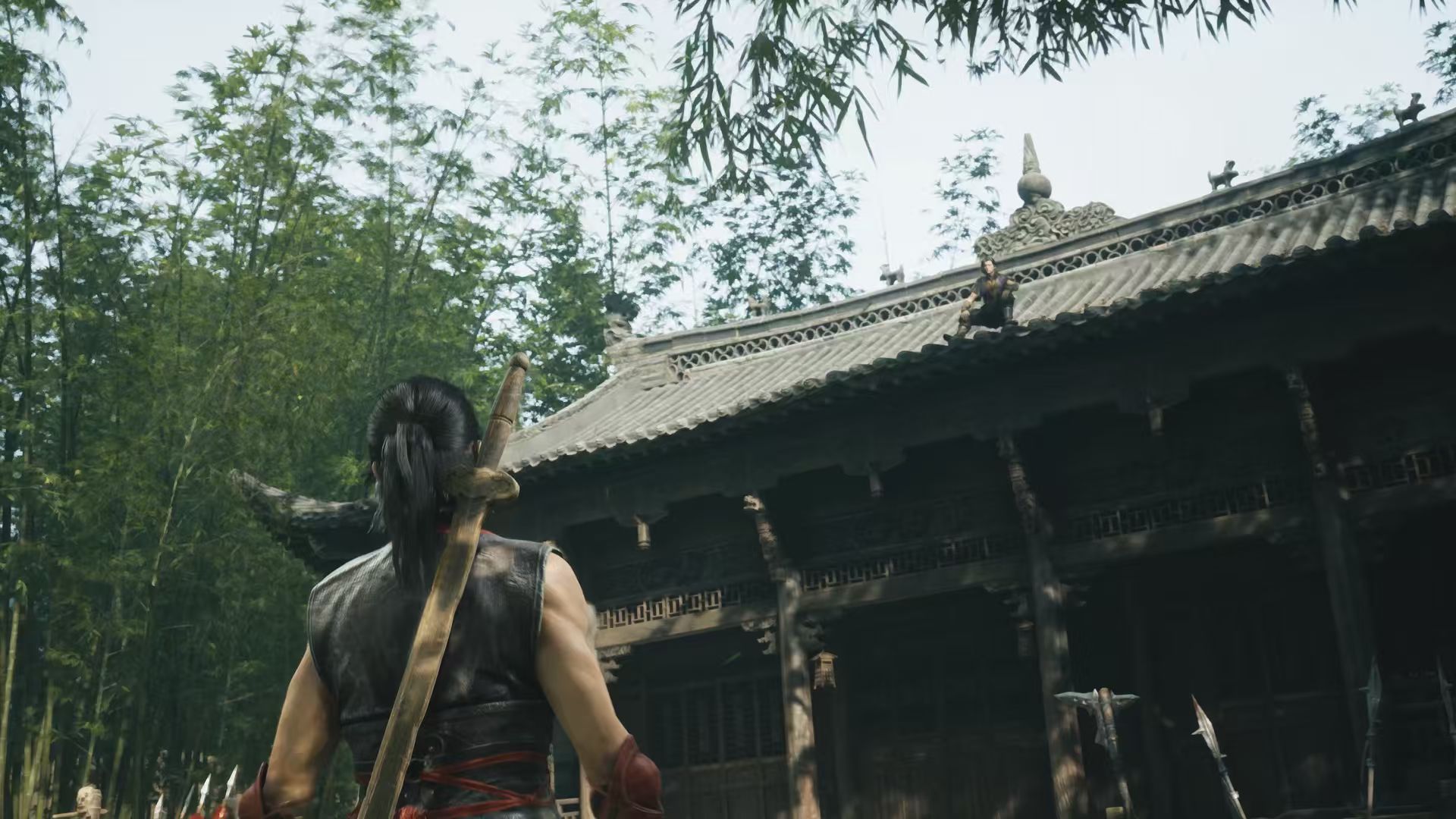
How long is Phantom Blade Zero?
Phantom Blade Zero's main story takes about 20-30 hours, an estimate from the director in December 2025. A thorough first playthrough that chases side content, exploration, and collectibles pushes closer to 50 hours, per the team's expectation shared with press in August 2026. There are 8 endings, decided by two factors together: how many side quests you complete, and whether Soul is carrying a particular something at specific story moments. The main story alone can be finished, but it very likely ends badly. The game drops clues signaling which threads matter — which clues and which items, exactly, has not been revealed.
The 20-30 hour main story
The headline number comes from a Game Rant interview with Soulframe Liang published in December 2025, days after Phantom Blade Zero's release date announcement at The Game Awards 2025. Asked about length, he said:
"I think for the main story, maybe 20-30 hours to finish the main story. But if you don't do anything else, you might end up with a bad ending."
Two things need reading carefully. First, 20-30 hours is a director's estimate, not a stopwatch result — the game ships October 29, and real completion times will drift with difficulty choice, death count, and exploration habits. Second, the sentence's real weight sits in its second half. The main story is a walkable path, but the way Soulframe describes it, the pure critical path is effectively the "if you don't do anything else" route — and that route feeds the bad ending.
Game Rant filed the campaign length alongside story-driven single-player games like God of War (2018) and Star Wars Jedi: Fallen Order. Against Elden Ring, the comparison the same report leaned on, Phantom Blade Zero is far shorter yet packs more endings — which is exactly where the report's headline came from. For a narrative-driven action RPG, it is a controlled, middle-of-the-road scope: long enough to justify a full-price purchase, short enough that a second playthrough is a realistic ask.
One more detail softens the clock. In GamesRadar's August 2026 hands-on report, the writer noted that Phantom Blade Zero lets you retry a boss from its second phase after a death instead of restarting the entire fight. For a game this combat-heavy, that is a meaningful time saver: the hours you lose to failure go toward learning the phase that actually killed you, while the parts you have already mastered stay behind you.
The 50-hour thorough playthrough
The other number frames the game's true size. GamesRadar's preview from August 2026 — written after multiple hands-on sessions with the title — states that the journalist "was told" a first run pushing for thorough completion can reach around 50 hours, with a mountain of optional content to back that figure up.
Set the two numbers side by side and the shape of the game becomes clear: a 20-30 hour spine, with optional content roughly equal to half the campaign wrapped around it. That ratio matters for the endings system, because — as the next section covers — the optional layer is not decorative. It is the input to the game's largest branching mechanism.
How the 8 endings are decided
Soulframe laid out the rule in the same Game Rant interview:
"We have 8 different endings in the game, depending on how many side quests you complete. There are story elements, and you'll know why. There are also different completions, like when you get to this point in the story, if you have something, it will be different, if you don't have something, it will be different. If you have that thing prior to that point, that will make it different."
Unpacked, the ending check runs on two variables:
- Side quest completion. The number of side quests you finish feeds directly into the ending calculation. The dedicated State of Play broadcast on August 17, 2026 showed the same system from the official side, describing how Soul meets citizens in need across the Wulin, and how interacting with them and completing some of those tasks "might even open up new story paths" while deepening your understanding of the world.
- Item checks at key story moments. At certain points, the story checks whether Soul holds a particular thing — and when he got it. Soulframe frames these as a kind of "item check" spread across the story's midpoint beats, and his phrasing implies timing matters: possessing the thing before a beat can play out differently from finding it after.
Just as important is what does not appear in the rule. Nothing official suggests a final branch-picking moment — no grand binary choice at the climax. The 8 endings read as the accumulated result of an entire playthrough's behavior. In other words, the game rewards players for how deep they go along the way.
The optional layer pays out beyond endings, too. Systems shown during the August 2026 State of Play let Soul expand his arsenal by defeating certain enemies, and upgraded weapons can be reforged at any time — every material invested comes back in full, ready to sink into a different style. In other words, every detour you take for the ending system also funds the build you carry into your next run. The director has also stressed to GamesRadar that the game invests heavily in layered, secret-filled level design; exploration here rewards digging on its own, and the ending system is one more reason to dig.
The bad ending, and the "true ending" question
The bad ending is the only ending type the studio has named, and its trigger is blunt: rush the critical path, skip the side quests, miss the items. It is worth being precise about what that is: a scripted outcome written for a Soul who never looks up from his countdown. The man has 66 days to live, hunted by an organization that wants him dead; a version of him who ignores every plea, every document, and every oddity in the world is a coherent character, and the story acknowledging that is a deliberate design choice. Framing the bad ending that way — as one written outcome among the eight — makes skipping side content a legitimate choice for players who mainly want the plot.
As for the "true ending" — the question many players are already asking — S-GAME has confirmed nothing. No true or best ending has been acknowledged, no ending names have been published, and no requirements for any of the eight are public. Guides claiming to list all eight endings by name, or ranking them A through H before launch, are running ahead of official information and deserve skepticism.
The game will tell you — that is the design
The worry with any endings system is silent failure: that some decisive thread sat two rooms off the critical path and you never knew. Soulframe addressed this directly in the interview:
"There will be guidance and there will be clues. If you're into the story, you'll know the clue. Just think like the hero would think. When he sees this clue (which is not so hidden, it's kind of obvious). You will know. There are readables and clues and NPCs to give you clues, and you will find out."
Per the director, the threads that feed the ending system will not be invisible. Readable documents, environmental details, and NPC dialogue all carry hints, and the design goal is that a player who never opens a wiki still has a path to the fuller endings. How loud those hints actually are in the shipping game can only be verified on October 29 — but the stated direction is clear: Phantom Blade Zero does not want its eight endings to belong only to guide-followers.
What the 66-day timer adds
One piece of story context sharpens every choice above. Soul operates on a 66-day countdown — the premise driving the entire plot — and the hardest difficulty shown in the August 17, 2026 State of Play, Sixty-Six Days mode, takes its name from the same number. The countdown is why the bad ending works as a narrative outcome: time spent on side quests is time spent understanding the world that is trying to kill him. The structure quietly asks one question — what is worth stopping for when only 66 days remain — and it puts that question to the player as much as to Soul. For the full premise, see our explainer on Soul's 66-day journey.
What is still unknown
Plenty, and it is worth separating from what is confirmed. None of the following has been addressed officially:
- The names of the 8 endings and the exact conditions for each;
- Which side quests influence which ending branches, and whether side quests contain their own consequential choices;
- The specific story checkpoints and items involved in the item checks;
- Whether a true or "best" ending exists among the eight;
- Whether a single save can see multiple endings in one run or a New Game Plus run is required.
Planning your first playthrough
If endings matter to you and you refuse to follow a guide, the confirmed rules already support a sound plan: accept the pleas of citizens who ask for help, read the documents you pass, hear NPCs out, and step into the suspicious corners you come across. Side quest completion is the only confirmed "volume" variable in the ending check, so doing more than you skip keeps the bad ending at a safe distance. A player who engages with the world the way the protagonist would — the director's own framing — is playing the game the way its branching was designed to read.
If you only want the story this run, the 20-30 hour critical path remains fully valid — just walk in knowing the director's own warning about where it likely ends. Framing it as a first-run style choice keeps it honest, and by the official estimate, a replay is only 20-30 hours away. Players who want a lower-friction story pass can pick Wayfarer mode, the narrative-focused difficulty option; those who finish and want the ultimate test have Sixty-Six Days mode, which bends the entire game around Soul's lifespan. Our full breakdown of weapons and difficulty covers both ends of that scale, and the August 2026 State of Play recap collects everything the deep-dive broadcast showed.
This article is based on official game materials, public developer interviews, and reliable press reports. Details may change before or after launch; the shipped game and official information take precedence.