S-GAME laid its weapon system bare during the dedicated Phantom Blade Zero State of Play in August 2026: more than 30 primary weapons, 25 secondary weapons called Phantom Edges — and room to carry exactly four of them into a fight, two primaries plus two Phantom Edges, with switching happening in the middle of combos. How weapons upgrade and how the skill tree reshapes them is covered in the site's weapons and difficulty guide; this article stays on the field question: what goes in each slot, and what to swap against.
The game launches on October 29, 2026 for PS5 and PC. Hands-on time is still a few weeks out, but between the official presentation and months of press previews, the skeleton of this system is already clear enough to plan around.
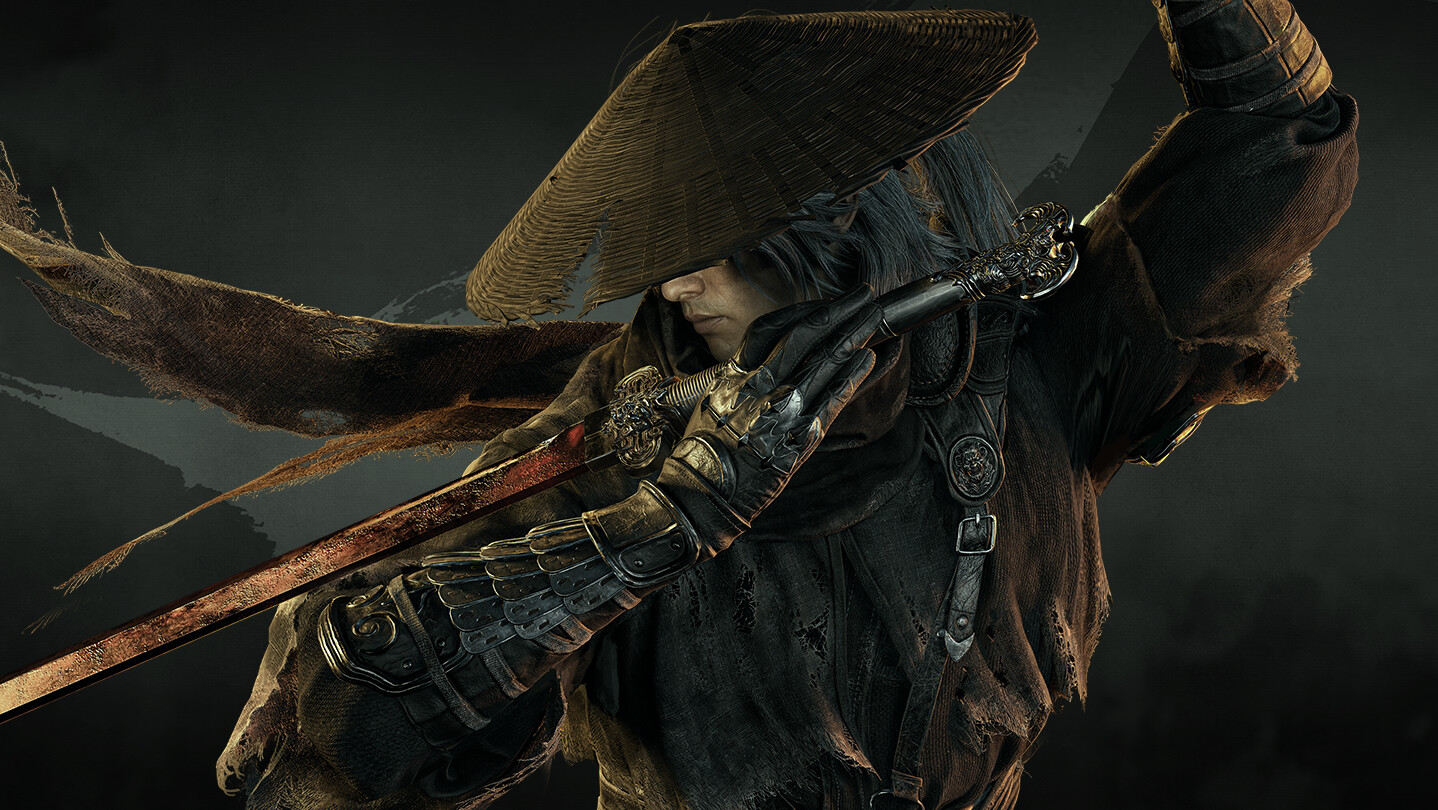
An official character close-up of Soul from the game's public materials. The longsword on his shoulder is the weapon type shown most often in official demos. Image source: official site; © PARAWULIN PRODUCTION LIMITED.
The four weapon slots: two primaries, two Phantom Edges
Start with the configuration itself. The State of Play confirmed the headline numbers — more than 30 primary weapons and 25 Phantom Edges — while Soul carries two of each into combat and can switch between them at any time. Gamers4All's roundup fills out the rest of the loadout from earlier sources: two potions and two accessories on top of the four weapon slots, and no traditional character levels — a framework director Soulframe Liang first described in his interview after The Game Awards in December 2025. RPG Site interview
The consequence is easy to state and easy to forget while playing: of the entire arsenal, two primary weapons define every fight, and two Phantom Edges ride along. Collecting thirty weapons is the meta-game; choosing four is the game. The slot structure itself announces the division of labor. Primary weapons carry what one roundup calls the conventional combat language — combos, pressure, executions. Phantom Edges are the unconventional layer: flamethrowers, cannons, tools that solve problems blades cannot reach.
Primary slots: one workhorse, one answer to its blind spots
Liang's design principle for primaries, from the same interview: the weapons take their prototypes from real traditional Chinese weaponry, and every weapon carries its own unique mechanics rather than sharing a common moveset template — the differences are meant to be readable in both input and animation. RPG Site interview Swapping weapons is not trading stat lines; it is trading an entire combo language, with its own rhythm and recovery windows.
On how to pair two primaries, the official material and the press previews converge on one idea: two weapons that solve different problems beat two weapons that merely feel good. The clearest example came from the official presentation itself — light blades flailing against a heavy tower shield, the kind of problem a loadout reserves a heavy weapon for (that matchup gets its own section under "Iron fists and heavy hammers" below). The inverse holds too: against fast, evasive enemies, a heavy weapon's slow windup and recovery are liabilities. Hands-on reports back the weight of this choice. At Summer Game Fest, one journalist ran two short swords alongside a heavy sword precisely because quick weapons felt comfortable and huge weapons handled trouble; SmashPad's preview the same season of coverage repeatedly notes that each weapon's windup and recovery timings need to be learned on their own terms. GamingTrend's preview
That collapses the primary-slot question into a single test: the second primary should cover what the first cannot, not duplicate what it does. One fast blade for everyday combos; the other reserved for what the fast blade cannot crack — tower shields, heavy armor, or a wide-open wound of a stagger window that deserves one enormous hit.
Phantom Edge slots: reach, crowds, and arms taken from the enemy
The two Phantom Edge slots are the unconventional half of the kit. The State of Play confirmed that these secondary weapons cover ranged pressure and status effects, that some are claimed directly from defeated enemies, and that ranged attacks and summons that assist in battle count among your build options. Gamers4All's roundup A GamesRadar journalist lived the full loop in a hands-on session: after felling a towering boss called Coppermaul, the reporter acquired the boss's own weapon. GamesRadar preview
That looting rule quietly changes what a boss fight means: a difficult opponent is not just a gate but a donation to your arsenal, carrying its weapon and its signature technique into your loadout going forward. No complete list of which Phantom Edge drops from which enemy exists yet. What the revealed examples already show is the role this class fills: these are not the weapons that answer "how do I deal damage," but "how do I reach it" and "how do I handle all of them at once."
What each revealed weapon is built to solve
The deep dive named several weapons with unusually specific mechanics. Mapped against the loadout logic above, each one covers a distinct failure mode.
Drunken Sword: trading poise for evasion
The Drunken Sword accumulates a drunken energy as combat heats up. Soul's movements turn staggering and off-balance — apparently full of openings — while his evasion improves substantially in exchange. 18zf's write-up of the official showcase The bargain is explicit: lost composure is the price, better dodging is the payout. It suits a style that dances on the edge of enemy attack windows, and punishes one that wants a steady, upright rhythm.
White Serpent and Crimson Viper: twin weapons as one kit
White Serpent and Crimson Viper are a pair of differently sized blades built around cooperation: using the White Serpent's flexibility, Soul flings the Crimson Viper out like a hidden projectile to land a surprise hit beyond sword range. 18zf's write-up of the official showcase The official Epic Games Store deep dive described another reading of the same pair — Soul stabbing and slashing with the lengthy sword while the Viper orbits him, slashing on its own. Epic Games Store deep dive The lesson for loadouts: in this game, "two weapons" can mean more than alternating — each can become an extension of the other.
Soft Snake sword: unmaking guards, cutting wires
The Soft Snake sword's flexible blade coils around an opponent's guard and breaks the defensive posture open, with high attack precision — and it can slice wire-type attacks out of the air. 18zf's write-up of the official showcase Its problem is "cannot get through": enemies who simply refuse to open their guard, and encounters where the field is strung with enemy wire work.
Iron fists and heavy hammers: the guard-breakers
These are the formal answer to the tower-shield problem. The official presentation demonstrated the light-versus-heavy matchup directly: thin blades bounce off heavy shields, and only heavy weapons like iron fists and hammers carry enough force to smash a defense open. 3DM report The cost is tempo — slow swings, long recoveries — which is why these belong in the second primary slot as specialists rather than as an all-fight main hand.
Tiger Cannon and Flaming Mane: distance and numbers
The Tiger Cannon scatters distant enemy formations with a single shot and can set explosive, self-detonating enemies alight before they close in. The Flaming Mane sprays a wide cone of fire, built for swarming packs of enemies like attack dogs. 18zf's write-up of the official showcase Between them, these two Phantom Edges cover the two scenarios primary weapons cannot: reach and volume. With one of each aboard, the four slots finally close their gaps.
When to actually switch mid-fight
With the right four equipped, the remaining skill is timing. From the official footage and hands-on reports, weapon switching is not a transformation animation bolted onto combat — it is a decision woven into the rhythm of a fight.
Switch by enemy type first. It is the clearest rule the material offers. Tower shields and heavy armor call for iron fists or hammers. Dense packs belong to wide-area flames like the Flaming Mane. Distant formations and suicide rushers are Tiger Cannon work. A turtling defender calls for the Soft Snake sword to unwrap their guard. The presentation presented "swap your arsenal against the enemy you face" as a core selling point of the system, 3DM report not a hidden mechanic to discover.
Switch by fight phase second. The showcased encounters change shape mid-battle — the Seven Stars formation moves from organized swordsmen to an entirely different kind of enemy mid-encounter. The weapon that carried phase one is not guaranteed to be the right answer in phase two; after a phase change, re-reading the enemy comes before committing to another combo, and possibly before re-choosing your weapon.
Switch by combat rhythm third. The core defensive loop is reading blue-light and red-light attacks and answering each correctly, and a successful defense opens the best damage window Soul ever gets (the mechanics are broken down fully in the combat system guide). Swaps slot into those windows: after parrying a heavy attack, while the enemy reels, is exactly when a heavy weapon swap lands its costliest hits; after an execution animation, before enemies re-form, there is a free moment to re-dress the kit. The reverse also holds — swapping while an enemy attack is already inbound hands the tempo over for nothing.
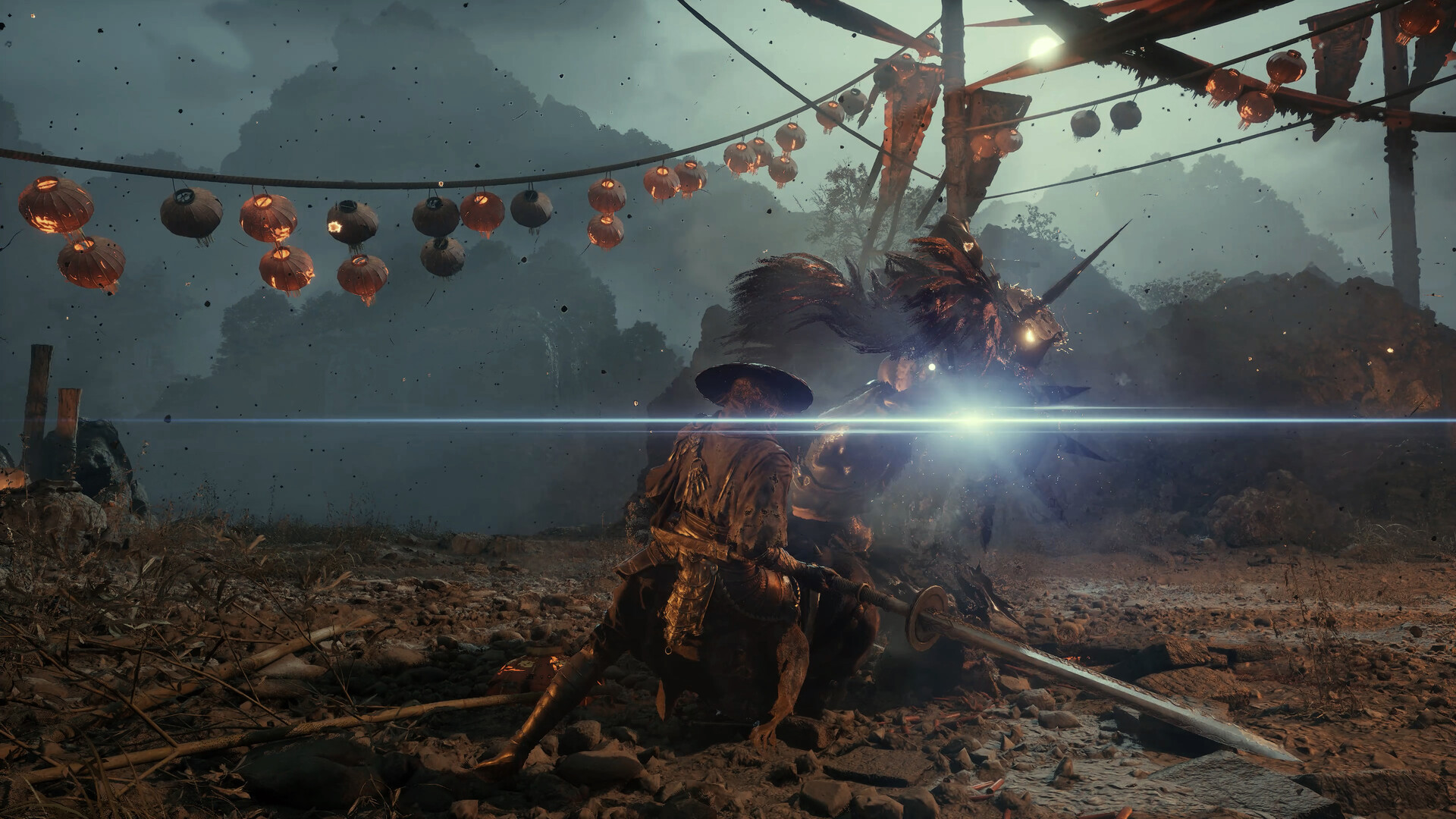
Official demo footage: Soul locked blade-to-blade with a massive armored foe, blue light flaring at the point of contact. Windows like this one — a successful defense against a heavy attack — are precisely when swapping to a heavy weapon pays off hardest. Image source: official site; © PARAWULIN PRODUCTION LIMITED.
Changing your kit costs almost nothing
Experimenting with a new loadout carries no real sunk cost. GamingTrend's reporter noted that primary and secondary weapons each carry their own windup and recovery timings, and that the whole configuration can be quickly rearranged in the menu between encounters. GamingTrend's preview The State of Play went further: any upgraded weapon can be reforged, returning every invested material in full so they can be poured into a different weapon or build path, and defeating certain enemies keeps expanding the arsenal. Gamers4All's roundup
The growth systems push in the same direction. Upgrading a weapon unlocks new forms and techniques that change how it actually plays, on top of a separate skill tree — progression designed to reward movement between weapons rather than lifelong marriage to one. The weapons and difficulty guide follows that progression in full.
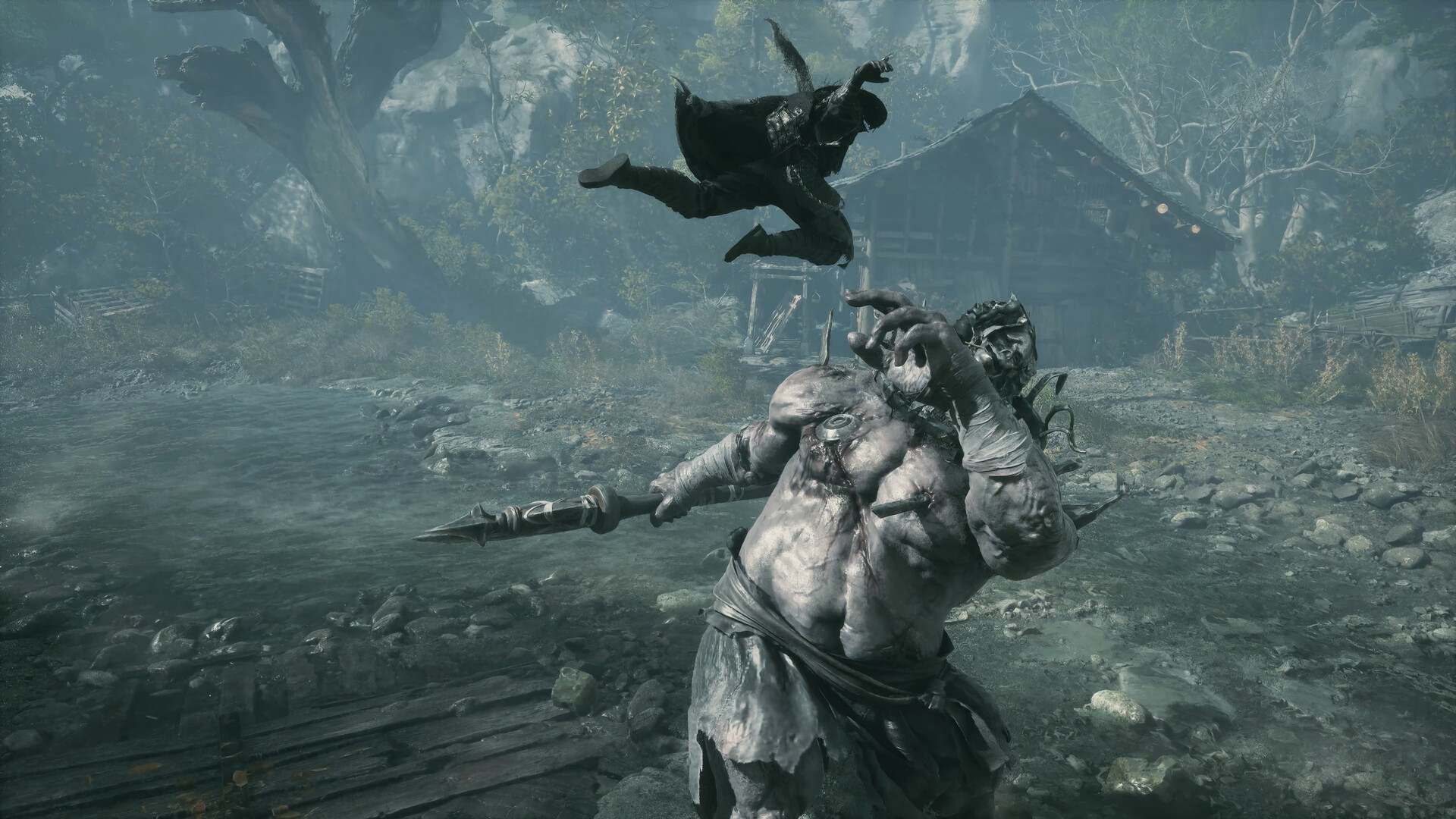
Official demo footage: Soul airborne above a giant polearm-wielding enemy. Defeating powerful foes yields their weapons and techniques, turning every named encounter into part of the loadout loop. Image source: official site; © PARAWULIN PRODUCTION LIMITED.
A loadout blueprint to start from
Fold the rules above into one starting point: each of the four slots should solve a different problem, and no two slots should solve the same one.
One primary as the everyday workhorse; the second primary aimed at whatever the first cannot break — most classically, a heavy weapon for tower shields and armored elites. At least one Phantom Edge covering distance or crowd volume; the Tiger Cannon and Flaming Mane are both validated by the official showcase. The last slot is style money: a mechanically distinctive weapon like the Drunken Sword or the White Serpent and Crimson Viper pair fits naturally there. The combinations that showed up in press previews — short swords plus a heavy sword, longsword plus two-hander plus bow — are all concrete instances of the same shape. SmashPad's preview
After launch, exact acquisition timing, upgrade costs, and per-weapon numbers will all sharpen these conclusions. The mid-game weapons you find and the enemies you meet will keep rewriting the starting lineup — which is, by design, what this system is built to do.
This article is based on official game presentations, public statements from the development team, and hands-on press previews. Weapon mechanics and values may change before the final release; the shipped game and official channels are the final word.