Phantom Blade Zero's review embargo lifted on October 26, three days before the game unlocks on October 29. As of publication, Metacritic lists 23 PC reviews averaging 88 and 15 PS5 reviews averaging 87; OpenCritic lists 22 reviews averaging 91. The Metacritic figures come from a Chinese-language roundup syndicated by Sina Finance on the day the embargo lifted; the OpenCritic figure comes from Gamersky's report the same day. Both marked their counts as current at the time of writing.
The aggregate numbers matter less than the pattern underneath them. On combat, the reviews barely disagree. On the story, they disagree a lot.
Why the three aggregate scores differ
The three numbers are not built from the same sample. Metacritic's PC average covers 23 reviews, its PS5 average covers 15, and OpenCritic's covers 22, so the outlet lists only partly overlap. Metacritic also scores each platform separately, which is why the PC and PS5 averages differ by a point.
Expect the numbers to move. First-day averages usually drift as more outlets publish, and not every review carries a number: Polygon's own review, for instance, is unscored, so the aggregate counts of 23, 15 and 22 are samples rather than a full census of the embargo lift. What is already stable is the shape of the consensus rather than its exact value.
The scores at a glance
Each outlet's own scale is preserved below; no conversion has been applied.
| Outlet | Platform | Score | Verdict in one line |
|---|---|---|---|
| PCGamesN | PC | 100/100 | Combat, world and story all land; a Metroidvania at heart |
| CGMagazine | PC | 95/100 | One of the best action games ever made |
| GamesRadar+ | PC | 90/100 | Fluid, satisfying combat with secret bosses and strong weapons hidden in a carefully built world |
| Push Square | PS5 | 90/100 | One of the greatest and most gratifying action games on PS5 |
| DualShockers | — | 9.5/10 | Huge, distinctive weapon and skill set, plus optional areas worth finding |
| IGN | — | 9/10 | Combat that never wore out across 50 hours |
| TheSixthAxis | — | 9/10 | Startling, occasionally absurd, and full of reasons to keep exploring |
| Gameblog | — | 9/10 | Tense, dense and thrilling, with uneven boss difficulty curves that can also swing too easy |
| GamingBolt | — | 9/10 | Audio-visual work and combat reinforce each other; memorable boss fights |
| Press Start | — | 9/10 | Combat, weapon mechanics and bosses outweigh the technical blemishes and repetition |
| GameSpot | — | 8/10 | The combat is good enough that the incoherent story stops mattering |
| VGC | — | 4/5 | Explicitly stronger than Black Myth: Wukong, but the story and characters are bland |
| Eurogamer | PC | 3/5 (60/100) | Excellent action undermined by balance and polish problems |
Only outlets that published a numeric score are listed, each on its own scale. A dash in the platform column means the roundup source did not specify the platform, and the VGC and Eurogamer lines are drawn from Polygon's roundup rather than from a direct read of those reviews.
What everyone praises: combat that never locks you in
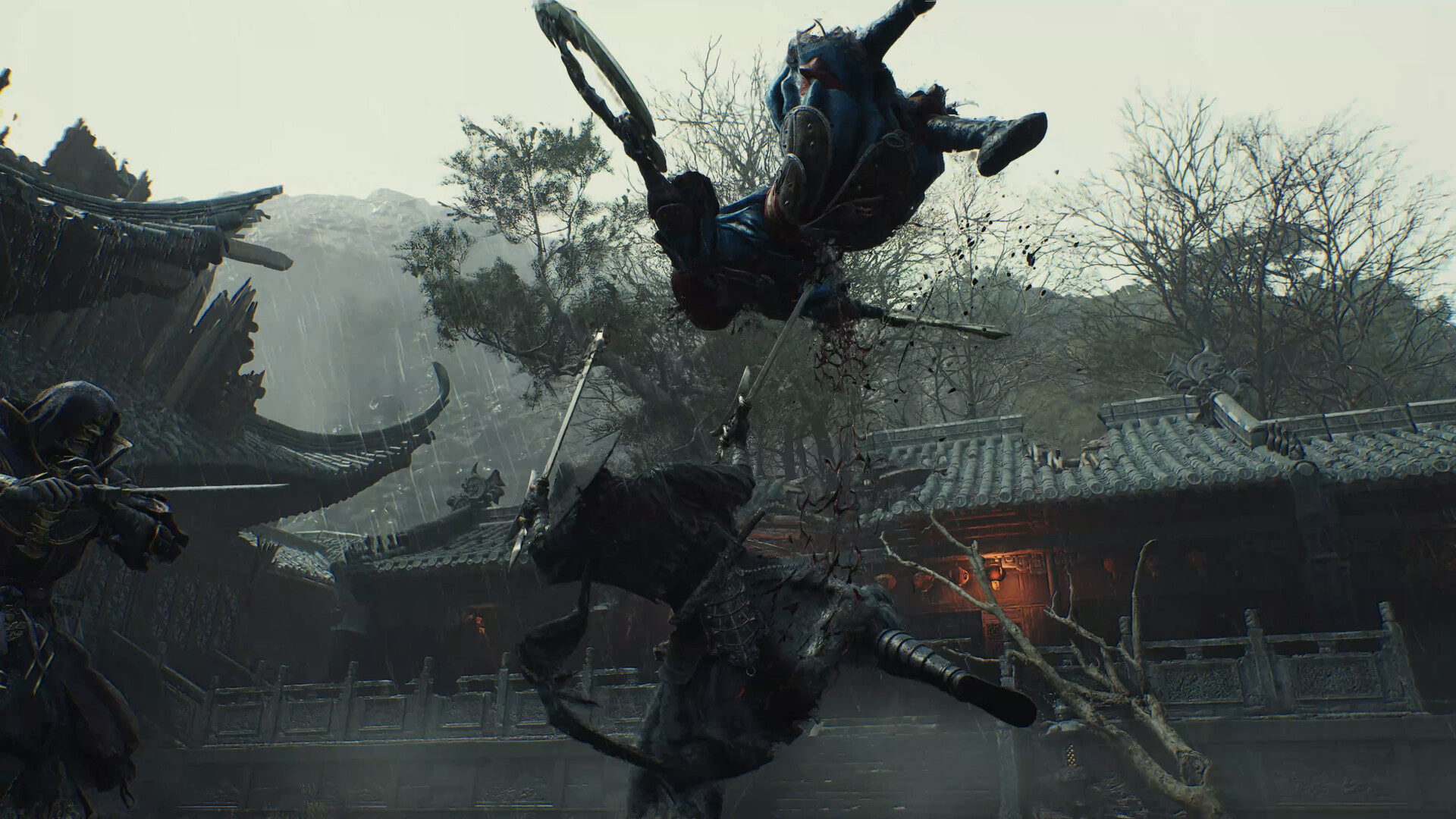
GameSpot's review is the most specific about why the fighting feels different. Attacks do not commit the character to an animation; a combo can be cut short and turned into a block or a parry at any moment, and some attacks deflect incoming strikes automatically. The result is offence and defence happening at the same time, closer to the exchange of blows in a wuxia film than to the turn-taking most action games fall back on.
The resource behind that rhythm is Sha-Chi. Holding a block and throwing heavy attacks drain the meter, while a successful parry drains the opponent's Sha-Chi instead, gradually breaking their guard and opening a window for sustained damage. Blue and red flash attacks mark moves that must be parried or dodged respectively. Swapping weapons quickly refills Sha-Chi, which is the mechanical reason the game pushes two primary weapons rather than one.
Push Square adds the fine print: normal attacks, dodges and parries cost no Sha-Chi at all, and only sustained blocking and heavy attacks drain it, slowly. Heavy attacks also build toward Power Surge, an unblockable combo. The review credits that generosity, rather than any single move, for how good the inputs feel.
Weapon and level design form the second consensus. DualShockers notes a large roster of weapons and skills with distinct identities, and a world packed with hidden bosses, side stories and fully optional areas. PCGamesN goes further and calls the game a Metroidvania first: exploration, backtracking, keys, secret bosses and blocked paths are the core structure rather than side content, and it describes that structure as remarkably well designed. GamingBolt and Press Start both single out the boss fights as the strongest material in the game.
The Metroidvania case, with examples
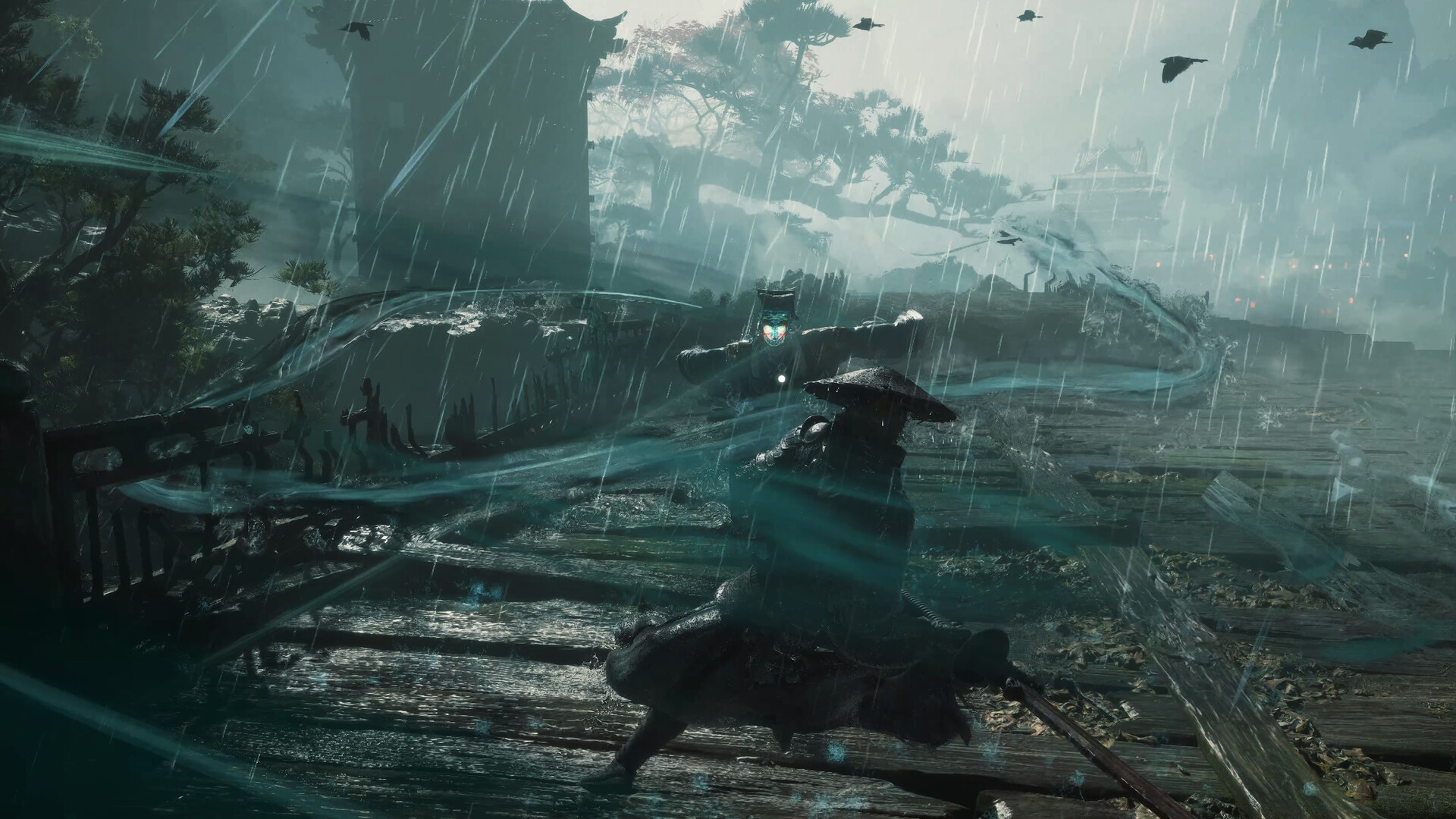
PCGamesN's review is the one that spells out what the Metroidvania framing means in practice, and the examples are concrete. The world is split into five main open areas plus a few smaller ones, and the review estimates roughly five hours to fully explore each map. Progress is gated by boss weapons rather than keys: a boss's flame mask burns away bramble, a secret Phantom Edge removes dense fog, and the first major foe's dual-wield chain blade lets you grapple to specific points. The same review notes that a blockade can sit in front of you for ten or twenty hours before the boss that opens it appears.
Two other details change how that structure feels. Boss fights can be restarted at the phase you died in, so a death does not send you back through the first health bar, and Phantom Edges, the secondary weapon slot, refill at checkpoint bells rather than at shops. Both are small systems on paper that compound across the 25 to 30 hours Push Square measured for the main story.
One caveat attached to the top score
The 100/100 is not unconditional. PCGamesN reports frame rate issues and stuttering in one of the game's maps, and says S-Game told the outlet the problem would be fixed by launch. It also describes the story as a little tricky to follow at times, asking the player to work out who is who and what they have done, while arguing that the emotional payoff at the end justifies the effort, particularly if you reach the perfect ending.
That is the same tension the lower scores describe, weighted differently: one reviewer treats the confusion as a puzzle worth solving, another treats it as a barrier.
What everyone criticises: a story that resists following
GameSpot's verdict lists two negatives, and they are blunt: the story is tough to follow and difficult to care about, and standard enemies are too easy to defeat, which turns clearing areas into tedium.
IGN lands in a similar place. Its reviewer calls the tale of betrayal and revenge one that mostly plays it extremely safe, and adds that invisible barriers and technical hiccups cause minor frustration. Polygon quotes the same review praising combat that never came close to feeling old across 50 hours.
Push Square points at delivery rather than plot: poor storytelling, incessant flashbacks and tedious collectibles threaten the pace of an otherwise fast game. GameSpot is more specific about which devices divide people. It singles out hand-drawn watercolour flashbacks to Soul's childhood, and a sequence built around traditional Chinese shadow puppetry, as genuinely good storytelling, then argues that recapping plot points on loading screens reads as a concession to failures elsewhere. The complaint is not that the game has no memorable scenes, but that the connective tissue between them is missing. VGC calls both the narrative and the characters bland, while still stating that the game is undoubtedly stronger than Black Myth: Wukong.
Polygon's own review settles on a phrase with a sting in it: the perfect martial arts game, for better or worse. Its argument is that the spectacle is achieved by taking agency away, so many of the most impressive moves are watched rather than performed.
Eurogamer's complaint is about contrast. Street fights against multiple opponents feel cinematic and expressive, and then a boss fight arrives and the power drains away.
The one real outlier: Eurogamer at 60
Eurogamer is the only outlet in this list below 80 on a hundred-point scale. The summary syndicated by Sina Finance credits the cinematic, flowing kung-fu combat, then says balance and overall quality problems blunt it; Polygon, relaying the same review, describes whiplash between frenetic cannon fodder fights and glacial boss battles. Every other outlet listed here scored the game at 8/10 or four stars and above.
That split is narrower than it looks. The disagreement is not about whether the combat is good, but about how boss fights should work. A system that makes crowd fights feel effortless runs into bosses that demand patience and pattern reading, and the same design choice reads as freedom to one reviewer and as deflation to another.
What this means if you are buying on day one
For anyone buying for the action, the signal is about as clean as review season gets: combat feel, weapon variety and boss presentation have almost no dissenters, and the two perfect or near-perfect scores come from outlets that weight systems heavily.
For anyone buying for the story, the expectations should be lower. At least four outlets describe the narrative as hard to follow or hard to care about, with GameSpot and VGC the most direct. According to Polygon's summary, Eurogamer also notes that embargo rules prevented it from discussing the parts of the story it liked, so that side of the ledger is not fully settled yet.
Soulslike habits need adjusting too. PCGamesN points out that S-Game has consistently insisted the game is not a Soulslike, and argues its checkpoint and exploration structure sits closer to a Metroidvania, with secrets, optional regions and blocked paths carrying the structure rather than decorating it.
Practical launch details live elsewhere on the site: unlock times and preload scheduling, PS5 file size and preload, the four PC presets, and how difficulty and the one-run platinum work.
First-day scores are a starting point, not a verdict. Once the game unlocks on October 29 and players get past the review build, the conversation will shift toward the things critics flagged but could not quantify — PC performance in particular, and how stable frame rates hold on the base consoles. Technical problems come up in review after review; how much they cost you is the part no aggregate score can answer.