A week after launch, players have split over Phantom Blade Zero's soundtrack. On social platforms, one camp calls it too harsh, or not Chinese enough; another says the music never letting up is exactly why the boss fights feel like being pushed forward. On November 5, music director Bo Caisheng published a long post on Zhihu that, for the first time, walked through how the score was written — and answered the "not Chinese enough" charge directly.
First, who is answering. According to a November 5 report by Gamersky, Bo is the game's music director and the composer of the great majority of its music, and has worked with producer Liang Qiwei (Soulframe) since the Rainblood series more than a decade ago. That history shapes the argument: the people telling him the score is not Chinese enough are not talking to someone writing wuxia music for the first time, but to someone who spent years inside the same set of melodies and deliberately changed his method this time.
Where the criticism comes from
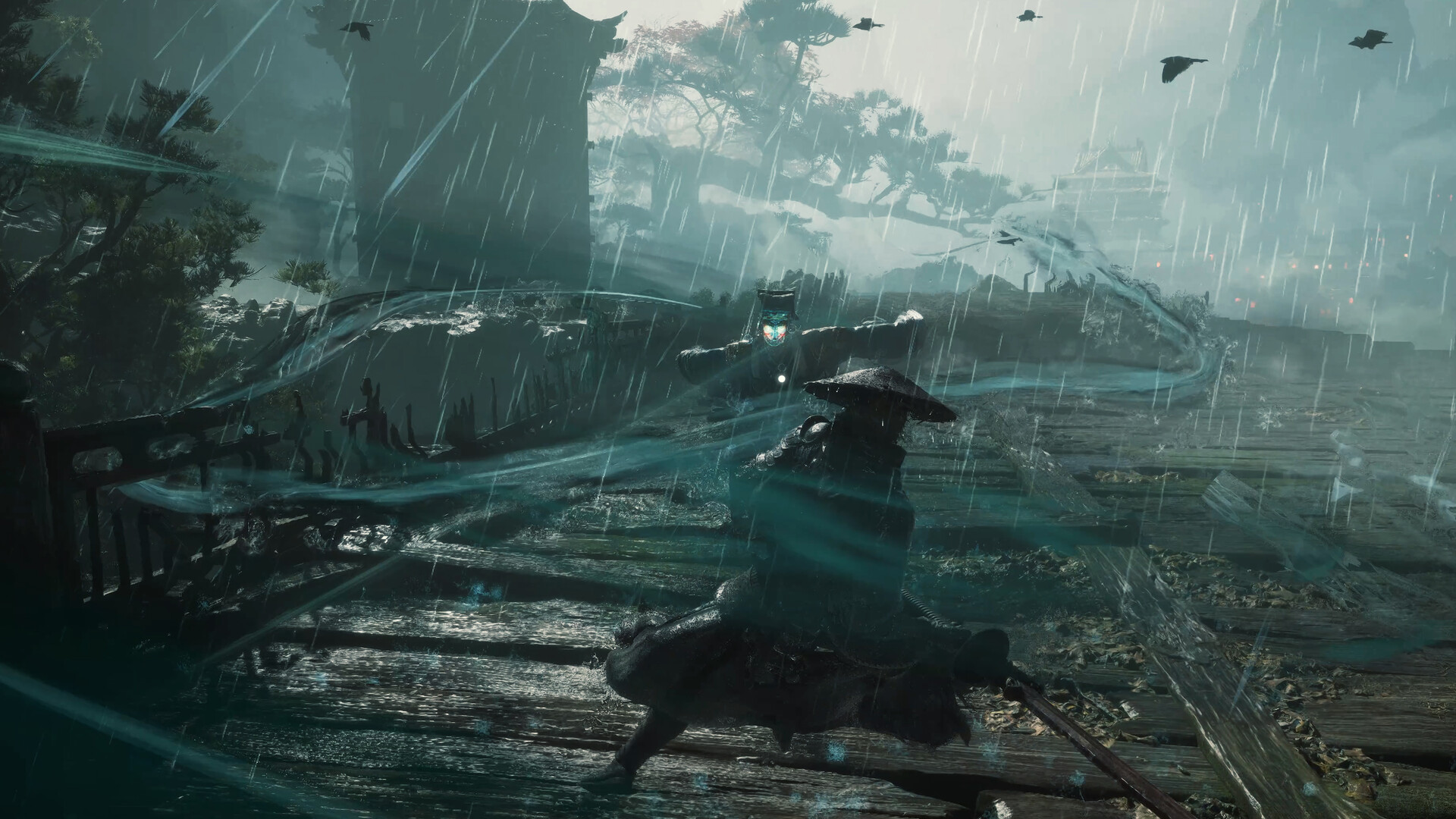
Gamersky's report records the players' wording as two words: too harsh, and not Chinese enough. The first is about the listening experience — dense highs, heavy drums, a long stretch held at high energy. The second is about temperament: the flute-and-guqin, leave-empty-space sound that reads as "wuxia" at first listen is not the lead voice in this score.
Bo did not dodge either word. He began by conceding there is no standard answer here: for some listeners, wuxia simply means dizi, xiao, guqin and silence, and that position "holds up completely." Then he laid out what he did instead, and why.
One caveat on sourcing: the long post appeared on Zhihu, and Gamersky's version is an abridged retelling that cut some of the music-theory passages. The quotations below are the lines that survived that edit, not the full text.
Reversing the writing order: Chinese instruments as bone
The pivotal passage is about the order in which he writes.
In the earlier Shadow Blade games, he said, he would usually build a foundation with Western orchestration first, then bring in erhu, pipa and dizi "to add colour." He was never satisfied with the result: it had only the "form" of Chinese style, never its "meaning."
This time he reversed it: Chinese instruments as the bone, everything else as the flesh, each supporting the other. Pull the Chinese instruments out of a track, he wrote, and it is like a stage built with no lead actor on it — the piece falls apart on its own.
That is a direct answer to the "not Chinese enough" charge. By his own standard, the old Western-base-plus-Chinese-colour method was the formal version of Chinese style; here the Chinese instruments carry the structure rather than the decoration. As for why it still sounds harsh, the answer is not in the instrumentation but in the demands of a fast action game — more on that below.
He also named a problem specific to this series, calling it a "historical burden": many of the melodies took shape more than a decade ago, and this time he pulled the old themes back out and polished them with today's production methods. The melody itself has not changed, he wrote; the hard part is knowing when it should appear. That also explains a familiar feeling for long-time players — certain passages sound like the older games not because they were sampled, but because they are the same themes in new arrangements and at new moments.
The instruments: everything he could find
For this score, Bo said he went through every Chinese instrument and playing technique he could find. The exclusions are more telling than the inclusions: instruments with strongly regional character, such as the bawo, hulusi and yueqin, were left out because he judged them wrong for the austere, desolate tone of Phantom Blade Zero. The problem was not a shortage of Chinese instruments; it was that this particular world is picky.
What he added says more about his direction. The post mentions that the team invited Peng Liying of the Beijing Musical Instrument Research Institute to record a set of reconstructed instruments she had built, and asked the players to bow and pluck them in new ways — not preserved on a shelf, but used as voices inside a modern arrangement.
For the specific instruments, there is a separate Chinese-language explainer dated November 4, syndicated by Sina Finance. It is a self-media roundup, and neither S-GAME nor Bo has confirmed its details item by item. That piece says the score uses reconstructed instruments including the xiqin, zhu and yazheng, and maps individual instruments to themes: xun for power, pipa for illusion, erhu for manipulation, matouqin with khoomei for the fear of huge things. It also states that all the folk-instrument parts were recorded live, with no MIDI substitutes. Those details are useful as listening cues, but they should not be quoted as an official track-by-track account.
On the vocal side there is one clear item: the theme song, 《心湖》 (Xin Hu, no official English title has been announced), is sung by Zhang Liangying. According to a November 6 report by ZOL, she was invited by the project to record it, and on November 6 she posted footage of her own playthrough that happened to reach the point where the song comes in.
In a boss fight, the music has to yield to the sound effects
Bo's explanation for the harshness is not a matter of taste but of technical constraint in a fast action game.
He described the scene: inside a single boss fight, ambient sound, the player's attacks, the boss's attacks, blade clashes, hit effects and loud music are all sounding at once. Different genres also mix differently — electronic music stands on its low end, metal lives in the upper mids. If the music occupies every frequency band, the player cannot hear the attacks; if the music keeps backing off, the fight loses its momentum.
So the solution was not to turn the music down as a whole. The team carved out space band by band, according to the genre of each boss's music: a rock boss and an electronic boss do not use the same ducking parameters, and the audio team fine-tuned the music-to-effects ratio for every single boss fight. He closed that section with his highest praise for the audio team.
This explains something that can read as a flaw: the density in the highs and the constant forward push exist so the score can still hold its ground in the milliseconds when clashes, hits and attack sounds all fire together. And the sense that it never stops is, in part, the combat rhythm asking it not to.
Two lion-dance phases and the erhu "horse cry"
Read only the long post and the score sounds like an abstract manifesto. The interview video China Daily published on November 5, as retold by Gamersky, is the opposite: specific instruments, specific fights.
According to that interview, Bo wrote the entire game's music alone. He calls the direction he was after "kung fu punk": kung fu as a derivative of Chinese culture, punk as avant-garde, experiment and fusion, with the goal of being "both Chinese and modern."
In practice, the lion-dance boss fight opens with an authentic southern-style dagu drum, then stacks Shanxi luogu percussion, electric guitar and suona on top in the second phase — one tradition from Lingnan, one from Shanxi, plus two modern instruments, which he described as a mash-up of north and south.
The fight against the character referred to as "eldest senior brother" goes further. To match visuals that turn red and deliberately exaggerated, he played wildly sliding erhu lines he described as a horse's cry, then layered guitar effects and metal on top to make it sound like it was coming out of a speaker cabinet.
The same interview contains an easily missed detail: one village in the game was modelled on Hong Kong horror films of the 1970s and 1980s, aiming for a specifically Chinese folk-horror unease. That says more about his sourcing than any instrument list — he is not digging in the tradition of "wuxia soundtracks" but in the listening memory of Chinese-language popular culture as a whole.
"Kung fu punk": a Shanghai with neon and a Chinese skeleton
Bo's metaphor for the style is a city, not a dynasty.
He said he wanted to build a "Shanghai": neon signs and skyscrapers, but with Chinese elements in an absolutely dominant position, and R&B, hip-hop and electronic music folded in. The emphasis is on proportion: the neon can be as bright as it likes, but it does not hold the controlling share.
For reaching audiences outside China, his reference point is the western. Western viewers may not know wuxia, but they know westerns, and the two share the setup of a lone hero pushing upstream against the current. He also said plainly that Western ideas of the East have long been shaped by Japan and Korea, so Phantom Blade Zero does not need to cater: using Chinese thinking — pentatonic modes, Chinese-style arrangement — to make something better and let the world see it is enough.
Asked about AI composition, he is firmly in the handmade camp for now, because "the most sacred part of music is expression." His stated goals are two: make something he has not heard before, and bring traditional Chinese instruments alive inside the tastes of young listeners today.
Possibly his last score for this series
The same batch of coverage contains one more music-related item of a completely different kind.
According to an overseas media interview retold by ZOL on November 4, Bo was asked whether he would continue with the next entry in the Shadow Blade series and said he would not join its development. His words: yes, this is very likely the last work he will create for the series, because for the whole S-GAME team, on the subject of wuxia and Chinese fantasy, they had held nothing back and had expressed everything they wanted to express.
He added that if he were asked now to score another game with wuxia at its core, he could not imagine where he would break new ground; the feeling of saturation is not fatigue but the certainty of having finished. Asked whether an extremely large budget would change his mind, he said no — he really does not need the money.
His next stop is already set: a new game whose Chinese title is 《湮灭之潮》 (no official English title has been announced), set in a Western context with London as both its location and its spirit, where he can work systematically in symphonic, gothic and steampunk idioms he had not explored before. He compared the move to someone who has lived in the mountains suddenly walking into a city.
One line has to be drawn here: he is talking about whether he personally will keep scoring this series, not about the series ending. ZOL's headline summarized it as a "series finale," but the quote is "the last work I will create for this series" — the subject is the person, not the sequence of games. S-GAME has issued no formal announcement about what comes after, and the official line on sequels, animation and merchandise has been itemized in a separate article (see sequels, animation and merchandise: how far the official word goes).
How the score got into development in the first place — boss music written before the boss existed, Liang commissioning a fight to match a track — is a separate thread, already covered in the earlier development story (see inside the development: one meeting in a PlayStation room).
Back to "not Chinese enough." Bo did not argue the point at the end of his post; he offered a condition for hearing it. If, in some boss fight, you hear a familiar erhu turn suddenly sharp, or a guqin sweep past like a blade's wind, or catch a trace of something like home inside an instrument you have never seen — then what he set out to do has partly worked. He also left one line for himself: when it is not good enough, admit it and practise more.
For a game a week past launch and which the developer says passed four million copies within 72 hours, a long post is unlikely to settle the argument about its score. But the part about why it sounds the way it does now has a technical explanation from the person who wrote it — and the part about whether it counts as wuxia, he admits he cannot answer either.