Phantom Blade Zero unlocked at 10:00 Beijing time on 29 October. Within three days its Steam store page changed rating tier twice: "Mostly Positive" on launch night, "Very Positive" from 30 October. By the morning of 1 November, the Simplified Chinese review pool alone stood at 30,161 reviews with an 87% positive rate.
The same curve has been reported as 77%, 78%, 79%, 80%, 81% and 84% in different outlets, which reads like a contradiction. Most of those figures are not wrong. They differ in when they were sampled, which language they counted, and how large the sample was. Sorted by timestamp, the numbers answer a more useful question: why did players hold back on a game that critics scored 88 on Metacritic, and why did they come round?
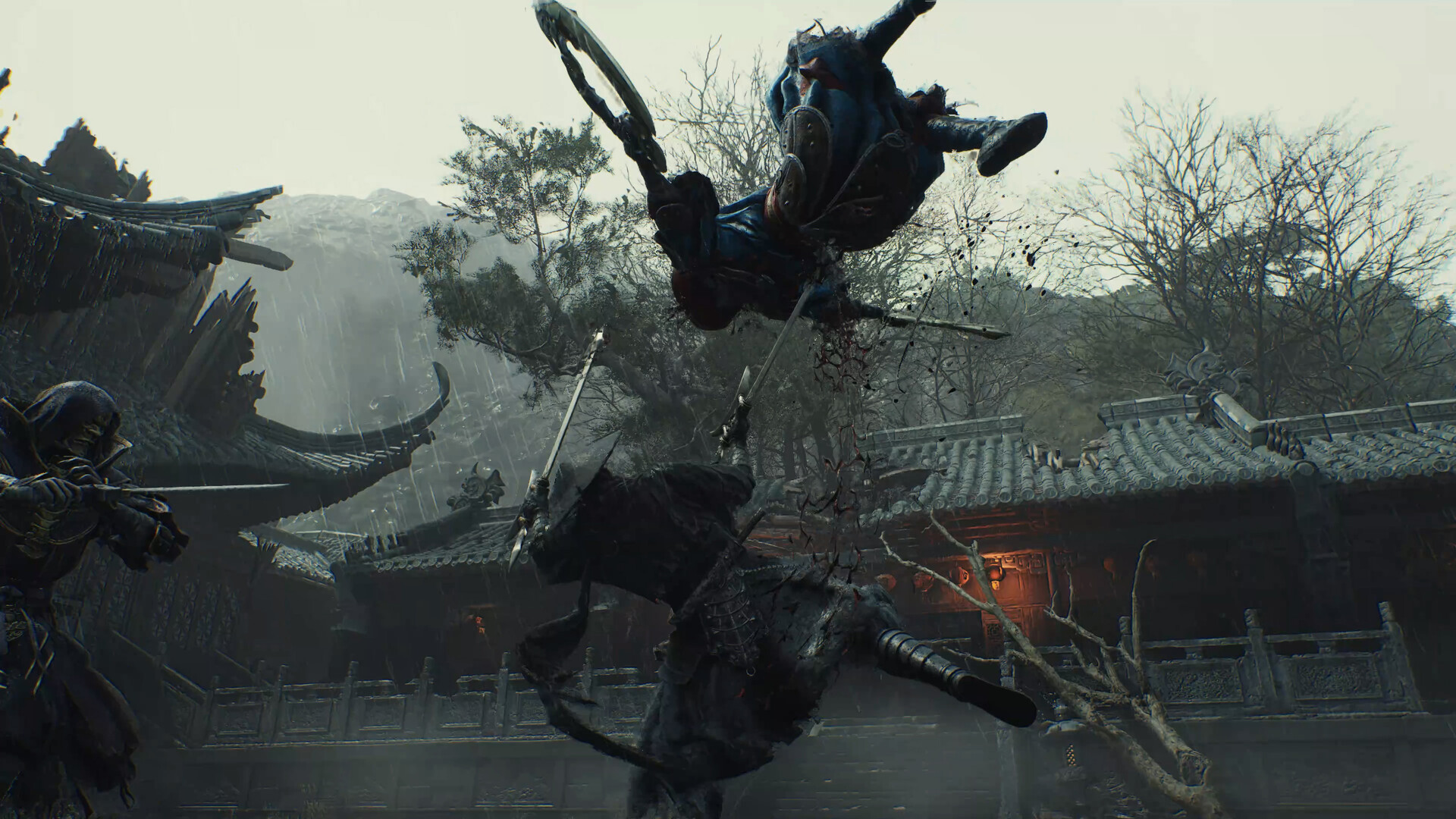
Launch night's 79%: a verdict built on 255 reviews
At 22:20 on 29 October, Gamersky recorded 255 Steam reviews, a 79% positive rate, and the "Mostly Positive" tier. Of those, 162 were in Simplified Chinese, with a 75% positive rate.
About two hours earlier, a 17173 piece republishing the same outlet carried a different set: 80% overall, 81% for Simplified Chinese, already "Very Positive" — and it added a line that explains the relationship between the two readings: the game had previously sat at 79%, "Mostly Positive". Both are live readings. The order is not a mistake in either piece.
Less than three hours separate the two readings, yet they differ by one point overall, by a full tier, and by six points on the Chinese pool. A sample of 255 explains much of that. At that size, a single extra positive review moves the percentage by roughly 0.3 points. Steam also cuts its rating tiers at whole-number percentages, and 79% and 80% sit on opposite sides of the line between "Mostly Positive" and "Very Positive" — which is why headlines about the game "rising to Very Positive" appeared while the sample was still tiny.
| Time | Reviews | Positive rate | Tier | Source |
|---|---|---|---|---|
| 29 Oct, around 20:00 | — | 80% overall, 81% Chinese | Very Positive | 17173, republishing Gamersky |
| 29 Oct, 22:20 | 255 | 79%, 75% Chinese | Mostly Positive | Gamersky |
| 31 Oct, 09:57 | 26,014 | — | Very Positive | Gamersky |
| 1 Nov, morning | 30,161 Chinese, 3,577 English | 87%, 88% | Very Positive | Steam store page |
Two further readings sit outside that table. A community aggregation post published on 31 October, listing Weibo and Zhihu threads among its sources and carrying an AIGC tag on the page, gives about 78% at launch and 84% on 31 October, without saying which language either figure covers; the same post also writes "only 77% on day one" further down. Three percentages in one article, no stated denominator — a fair part of why the numbers flew around for three days.
The interesting column in that table is not the percentage but the sample size. At 255 reviews one percentage point is three reviews; at 26,014 it is more than two hundred. Two readings can both say "79%" and mean very different things. The growth rate is the other thing the table shows: the Simplified Chinese pool alone on 1 November, at 30,161 reviews, is larger than the global total Gamersky recorded on 31 October.
The first wave of negatives never got past the launcher
On launch day the complaints were tightly clustered, and most had nothing to do with the game's content.
Gamersky's launch-day piece put it plainly: many players reported being unable to get into the game at all, hit by long shader compilation and by Steam API detection errors. A Sohu account post published on the afternoon of 29 October filled in the specifics. The most common report was "failed to initialise SteamAPI", with repeated launches stalling at initialisation. Others saw the shader compilation step pin the CPU at 100% with no way out for half an hour. Some could not remap the directional keys in the opening settings menu.
That post drew a conclusion worth repeating: a substantial share of these negatives were not a verdict on the game, because the blocker sat in the startup process. The data afterwards is consistent with it. The recovery began on 30 October, after the day-one patch shipped and after enough players had finished compiling and actually reached the title screen.
Shader compilation is not unique to this game, but on PC it has to happen on each player's own machine. Console hardware is uniform and the work can be prepared in advance; on PC, where GPU and driver combinations vary, that step can only be walked through locally — the 31 October community post makes the same point about the platform gap. When it hangs, the review a player can write within the first hour is inevitably about not getting in.
The other half: combat, art direction, and the Sekiro comparison
The negatives describe the threshold. The positives describe the four or five hours after it.
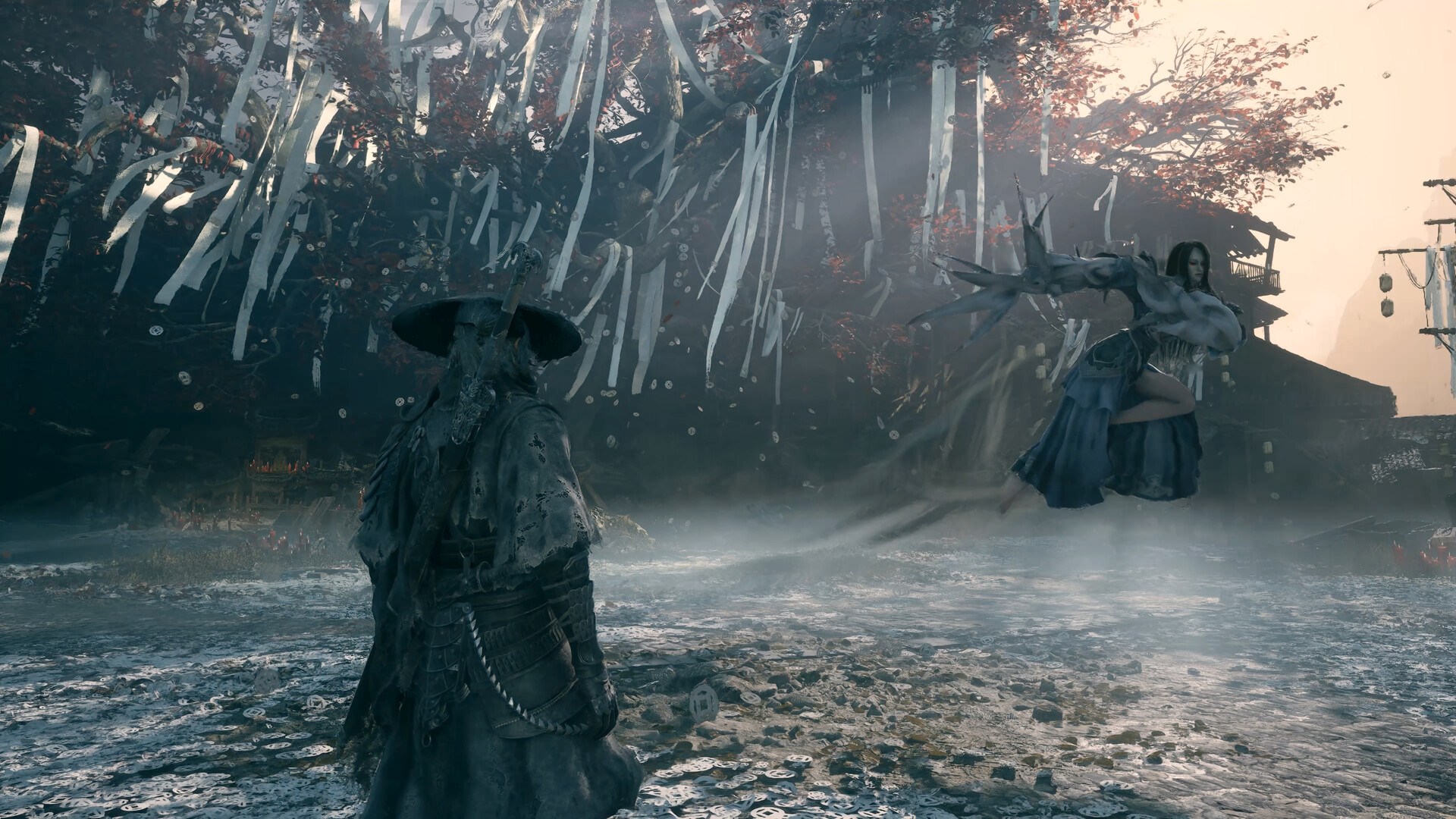
Gamersky's 31 October piece summarises where the praise lands: a fast, demanding combat system, strong art direction, and fluid wuxia action — with a good number of reviews comparing the combat feel to Sekiro. The comparison was already circulating during the preview period and survived into the player reviews.
The 29 October Sohu post carries two matching reports. One player, on a card the post identifies only as "7650", ran 1K resolution at medium-high settings at around 140 frames per second; others reported no stutter on high and very high presets. Players on DualSense rated the rumble and audio work above that of comparable action games. Both are individual cases, but they explain one thing: on machines that could get into the game, optimisation was not what these players were complaining about.
That is the other half of the recovery. The patch addressed part of the performance problem; the rest of the audience got through the door and gave its score to the combat and the art.
What the studio actually changed around launch
Two official announcements bracket this curve.
The pre-load notice of 26 October set three hard requirements: the game is approximately 145GB, players should reserve at least 300GB of free space for pre-loading, and it should be installed on an SSD. The longer notice of 28 October stated that the day-one patch was about 5GB and, in the studio's words, "significantly improves ray tracing and path tracing performance". The same notice flagged performance instability on NVIDIA's 621.01 driver and recommended rolling back to 617.42 with a clean install.
Neither notice addresses "failed to initialise SteamAPI" or a hung shader compile item by item. What they prescribe is updated drivers, an SSD, sufficient free space, and one patch aimed primarily at performance. Two earlier articles on this site document them in detail: the day-one patch and the driver rollback and pre-load and file size.
Blurry picture and floaty hits: two arguments settings can settle
Beyond the technical blockers, two other complaints recurred across the three days, and both respond to settings.
The first is a soft, blurry image. The 29 October Sohu post points at a specific culprit: the super-resolution output resolution is set to "Auto" by default, and in that state the actual render scale is only 75%, so the image is not rendered at 100% and then upscaled — clarity and detail are given up. Raising output resolution manually sharpens the picture; the post's guidance is to trade clarity against frame rate according to the hardware, and one player's own write-up simply pushes it to 100%. That reading comes from players and technical bloggers rather than from the studio, but it explains why the same game looks blurred on some machines and clean on others.
The second is the feel of combat. The 31 October community post relays several player descriptions: you cannot tell from the animation whether a hit connected and end up glancing at the enemy's qi bar; the blue and red tells have to be read as colours rather than from the enemy's movement. The same post records the counter-experience: setting the blade-clash timbre to 80, maxing sound effect intensity and raising DualSense vibration to maximum makes the impact feel substantially firmer, and one player's advice after three hours is that the prologue is flat and the experience lifts after the carriage fight.
These two arguments are not the same kind of problem. The default resolution scale is a parameter that can be changed back. The feel is a design choice: feedback kept restrained to serve very fast exchanges, at the cost of feeling hollow for the first hour to anyone used to heavy impact. One is fixable; the other can only be adapted to or adjusted around.
Thirty thousand Chinese reviews, three thousand English ones
On the morning of 1 November the Steam store page carried two numbers worth separating: 30,161 Simplified Chinese reviews at 87% positive, and 3,577 English reviews at 88%.
Both need their denominator stated. The store page only ever shows "user reviews in your language": opened in a Chinese-language context it reports 30,161 at 87%, opened in an English-language context it reports 3,577 at 88%, and neither is the all-language total. The headline badge at the top of the page therefore depends on which language you are reading it in.
The audience was still arriving while the rating recovered. SteamDB's own Steam news post recorded a new concurrent peak of 775,647 players on 31 October, two days after launch — a figure that counts how many people had the game open, not how many bought it, but one that fits the same picture as the review growth.
The Chinese pool is more than eight times the English one, so the "Very Positive" most Chinese-language visitors see is driven by Chinese samples. The one-point gap between the two also undercuts the usual explanation that Chinese players are simply more forgiving. On this game the split is not by language; it is by whether a player got past the launcher.
Buying in now: the obstacles you still have to clear yourself
Pricing in mainland China has not moved: RMB 268 for the standard edition, RMB 328 for the deluxe. Three days after launch, the practical checklist is short and specific.
- Install on an SSD and keep at least 300GB free. That is the official pre-load requirement; the game itself is about 145GB, and the studio has not explained what the extra headroom is for.
- On NVIDIA cards, follow the 28 October guidance and roll back to 617.42 with a clean install. 621.01 was named as the unstable one.
- Give the first launch time to compile shaders, and avoid force-quitting and restarting repeatedly while it works. A good share of the launch-day "stuck at compiling" reports started exactly there.
- Once in, change two settings early: take super-resolution output off "Auto" and trade between clarity and frame rate according to the hardware — one player's write-up simply pushes it to 100% — and turn motion blur off. Sharpness and smoothness follow those two; the feel of impact depends more on audio and controller vibration.
- On PC, connect a controller by a USB cable that supports data transfer. Reduced DualSense haptics over Bluetooth is general experience rather than something tested on this game.
Players sitting at the minimum specification, or on older drivers, are better off waiting for the next patch. The current recovery comes from more people getting through the door, not from the root causes of the startup failures being fixed one by one — none of the official notices contains an item for them.
Both 77% and 87% are real readings; they belong to the front and back halves of one curve. What the negatives were mainly pinning down was the stretch on day one when the game would not start. Once that wall was worked around, the review system went back to measuring what it is supposed to measure: the combat, the art direction, and a rhythm of attack and defence that takes several hours to feel natural.