Much of the discussion of Phantom Blade Zero's score since launch has stayed on texture: too harsh, too dense, not Chinese enough. Those words describe volume, frequency balance and the mix. In a November 6 interview with IGN, composer Caisheng Bo talked about a different layer — the second meaning he assigned to each Chinese instrument, and the techniques he used to push players forward.
His starting point is a rule he wants to break. In traditional Chinese music, he says, each instrument carries a fixed set of associations: what it represents and how it should be used. He calls this a form of stereotyped expression. The erhu most often stands for heroic action and the sorrow of personal endeavour; the pipa is tied to a feminine image and to danger lurking on the battlefield; anything outside those conventions "may seem out of context." Bo is based in Beijing and is a graduate of the University of Virginia in the United States.
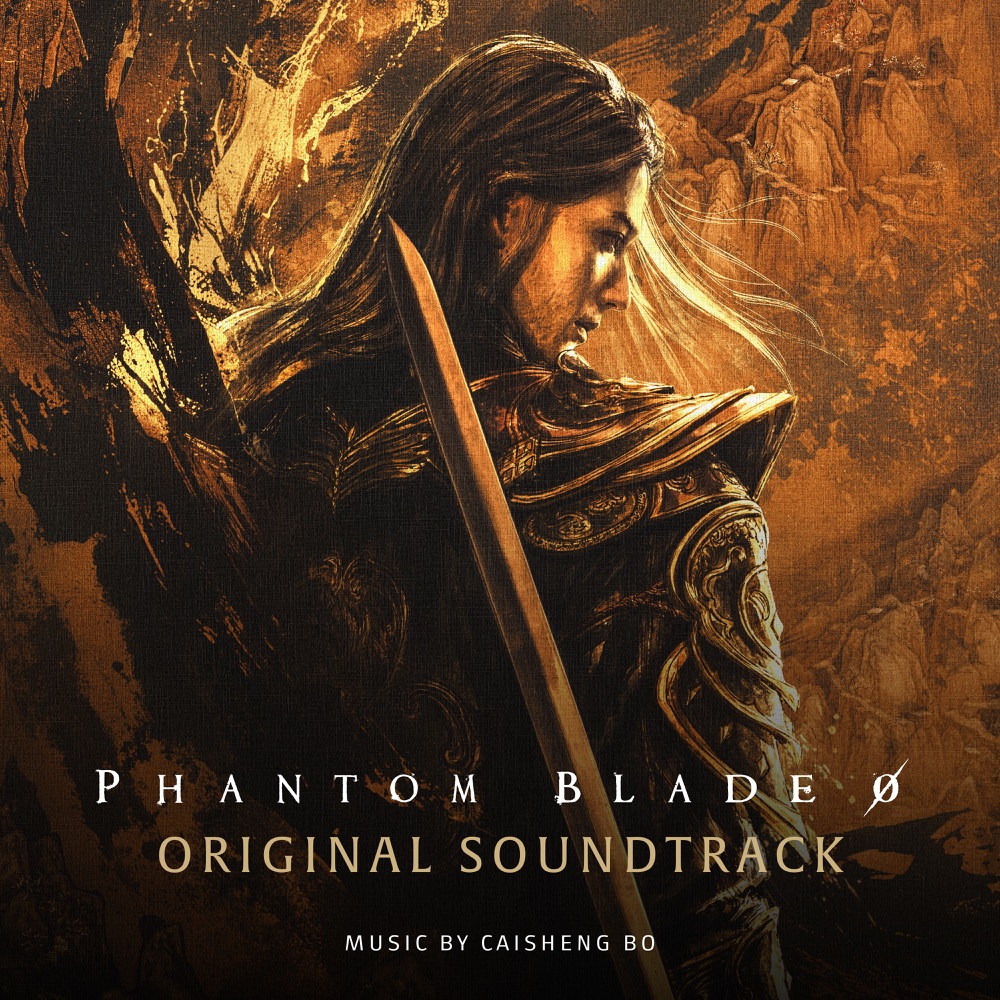
Phantom Blade Zero works against that rule — not by treating Chinese music as one overall flavour, but instrument by instrument, each given a pair of opposing meanings. He describes these polarities as one of the design choices meant to carry the story through the music rather than alongside it.
Every instrument carries a second meaning
His method is to set up a polarity for each instrument: one pole keeps the traditional association, the other attaches a new one. In the interview he went through them one by one, and the four only make sense read together — the orchestration was not chosen for how it sounds in isolation.
| Instrument | Traditional association | Second meaning in the game | Where it lands |
|---|---|---|---|
| Erhu | Heroic action, the sorrow of personal endeavour | Manipulation | Red threads descend from the sky and haul enemies up, held like puppets |
| Pipa | A feminine image, danger in the dark on a battlefield | Discordance | An otherworldly realm where time stops and space distorts |
| Morin khuur and khoomei | Mandate, righteousness | Megalophobia | The pressure of vast objects |
| Xun | Weeping | Absolute authority | The entrance of a character of absolute authority |
None of this is nostalgia for its own sake. In the same interview he described the Chinese music most listeners know as "beautiful ancient villages or sacred temples", something that looks as if it came straight out of an ink-wash painting, and said the kung fu punk concept let him make "bold musical decisions to match the visuals" — bringing in the modern side of Chinese music, the Shanghai of skyscrapers and neon, and setting Eastern instruments against Western pop, trap and metal. The polarity is where those two sides meet: not a folk passage and a rock passage taking turns, but one instrument carrying both at once.
Erhu: beyond heroic action, "manipulation"
The erhu keeps its traditional layer: heroic action. The second is manipulation. Bo's image is specific — red threads descend from the sky, pull enemies into the air and hold them there like puppets. It is one of the key images he names, and the erhu sits on top of it.
Nothing is cancelled. The same erhu can carry the grief of a protagonist charging forward or the situation of a person held in someone else's hand. The difference is not the instrument but what the shot is doing in those few seconds. In the first case the sound tells the player to move; in the second it tells them who is moving whom.
Pipa: beyond battlefield danger, "discordance"
The pipa's traditional associations are double: a feminine image, and the danger that waits in the dark on a battlefield. His second meaning uses the word discordance — an otherworldly realm where time stops and space distorts.
So when the pipa enters, the player is not simply facing "there is an enemy" but "the rules here are different". The danger remains, but it shifts from someone waiting in the dark to the physics of the ground underfoot no longer applying. That is a different kind of threat, and it needs a different kind of listening.
Morin khuur and khoomei: beyond mandate, megalophobia
The morin khuur, or matouqin, and khoomei throat singing traditionally stand for mandate and righteousness. In the game they also carry megalophobia — the fear of vast objects.
The pairing is efficient acoustically. The morin khuur's low sustained tone under throat-singing overtones already sounds like something enormous, far away and unavoidable. The traditional layer is about which side a person should stand on; the second is about how small a person is at that scale.
Xun: beyond weeping, absolute authority
The xun, a clay ocarina, is most associated with a weeping technique and is traditionally used to express crying. Bo says it is also heard when a character of absolute authority is present.
The weeping does not disappear; it moves to a position that does not belong to the weak. The same sound can be a victim crying or the air tightening when someone powerful walks in. The player hears one timbre; the judgement comes from who is standing in the frame. The xun's hollow, breathy tone sits close to a human voice, which is part of why the weeping association attached to it in the first place.
Zuo Shang's scenes carry a stutter that grows louder
Beyond the instruments, the interview describes a layer that is easy to mistake for a sound bug: stuttering sound design in the cutscenes.
It is most obvious when Zuo Shang is plotting. As the story progresses, the stutter grows louder and more present. Bo's explanation is that the accumulating stutter suggests Zuo Shang's swelling ambition — the Sha Qi, or killing intent, that he can no longer contain.
The device does not rely on dialogue. Players may not notice it changing, but on a second viewing of the same scene they may find that the sound had already rewritten their judgement of the character. It follows the same logic as the instruments: the sound states an attitude first, and the story supplies the reason later.
The combat score is played faster than the picture
On November 18, PlayGround.ru relayed a working method Bo described on the Bonfire Conversations podcast, hosted by Hamidreza Nikoufar.
According to that account, S-GAME sends him footage of gameplay and boss fights. He watches, taps out the rhythm of what is on screen by hand, and then deliberately raises the tempo of the piece. Combat tracks, in this account, were always recorded a little faster than the picture required.
The point is not showmanship. The report says the aim was a hidden psychological pressure that nudges players to fight more aggressively and hints that buttons need pressing a little earlier than they are used to in other games. The retelling preserves one line from him: "Since this is an action game, tempo and how fast the track turns out are extremely important."
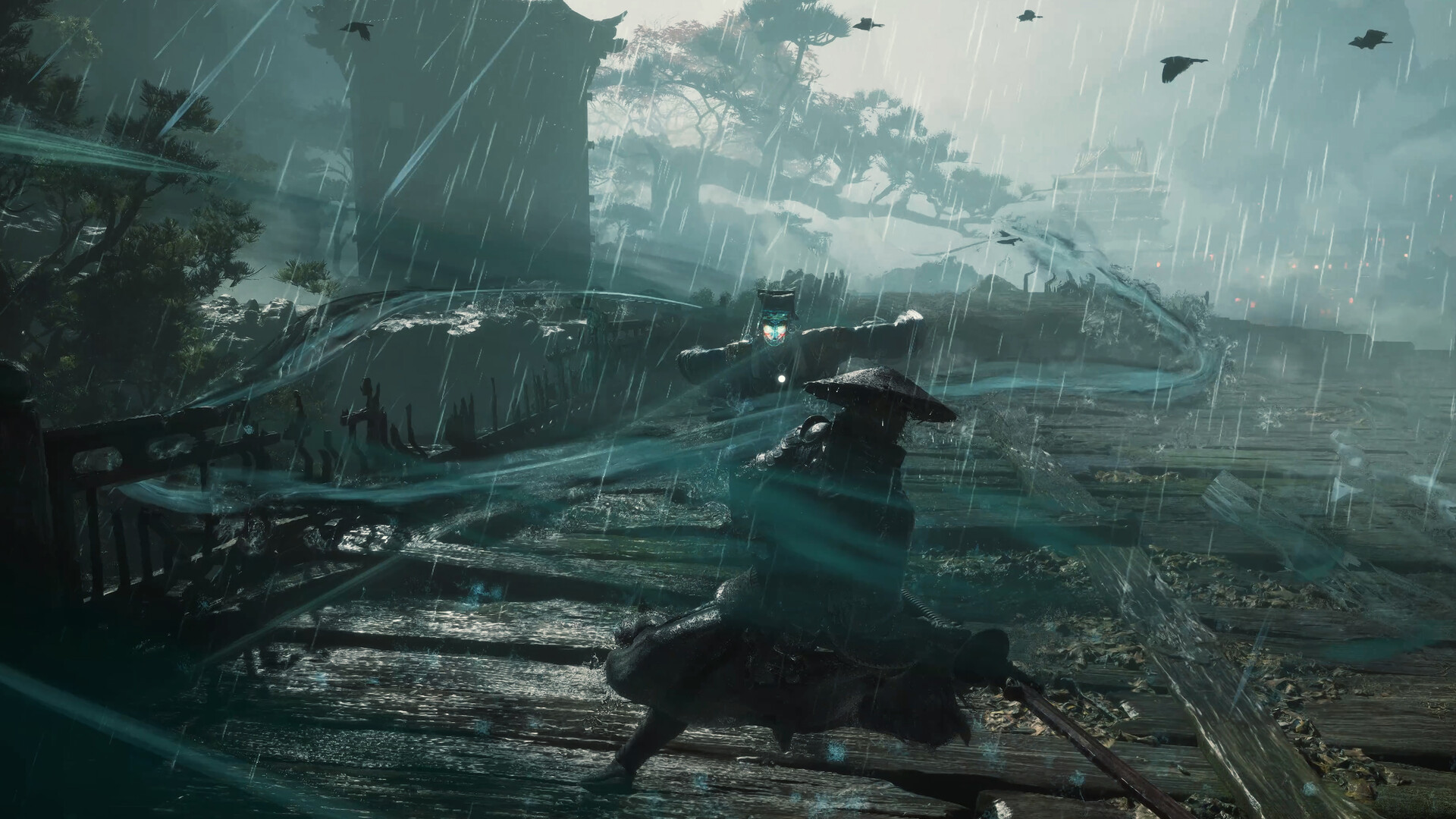
That tempo has to hold up a specific combat system. The same report describes fights built on the Sha-Chi mechanic and instant switching between weapon types, inside a kung fu punk aesthetic. A drawn-out pause in the music, in its reading, would immediately deflate the momentum of a duel.
The order in which he picks instruments connects to this. He studies the boss design first, then chooses an instrument with the right cultural background, so the theme carries more cultural information and lands more readily with a Chinese audience. To keep the folk instruments from drowning in a dense, fast mix of rock, metal and electronic music, each theme uses at most one or two traditional instruments.
One more factor is the job title. At S-GAME he held both composer and music director, so interactive transitions, looped fragments and melodies returning by combat phase were his to tune. Large Western studios usually have a separate music director handle sound planning.
Four-hour playthrough videos, and a game tuned to the music
In the IGN interview he described how the score entered development.
Once an area was about 60 percent complete, Liang Qiwei (Soulframe) would send him in-game footage. The recording was a full playthrough — taking hidden paths, defeating enemies, finding treasures — the way a player would. He regularly received four-hour recordings for a single area, then divided them into segments and planned the music for each one. That is a lot of footage to score against: four hours of play for a single area, before any of it is final.
Because he was both music director and composer, he knew where the music should start and which emotion it had to catch. In the other direction, once the team received his demo, they fine-tuned the map, the combat and the boss fights to match the music.
In his account this is not a one-way "picture locked, music follows" process. The music supplies the emotion and the tempo first; the level then moves toward that tempo.
One time scale is worth noting: most of the melodies were not written for this game. According to the same interview, the collaboration began 18 years ago with the indie game Rainblood 2: City of Flames, when one of them was in high school and the other in graduate school. The melodies carried over; the stutter and the polarity system are new.
Where to hear these choices in the finished score
The goal of these layers is that the player never consciously hears them. What can be checked is not whether a passage sounds good, but whether the same instrument gives opposite judgements in two scenes: the erhu is grief in a charge and helplessness when someone is hauled up on red threads; the pipa is danger in an ambush and dislocation in a realm where time has stopped. Listen to a passage, then look at the frame to see which side it is on. That is more reliable than reading a track list.
The soundtrack was released by Milan Records on November 6 — 81 tracks across four discs; the track list and disc breakdown are in the soundtrack release piece. The full "too harsh, not Chinese enough" argument, his response about Chinese instruments as the bone, and his statement that he will not score another entry in the series are in the score explainer.